




Do Natural Cleaners Work?

Many commercial cleaners contain toxic chemicals that are hazardous to our health and to the environment. Chemicals in common household cleaners have been found to induce occupational asthma, reduce fertility and birth weight in mice, reduce embryo survival in fish, reduce sperm count in adult men, and cause allergies in children. This list only includes some of the proven effects of chemical cleaners. There are no studies on the effects of long term exposure to these chemicals or the effects of the interaction of chemicals in our environment.
We need to balance our need and desire for cleanliness against the effects these chemicals have on our health and the environment. What this article seeks to do is look at the science to determine if natural cleaners are a viable alternative.
In order to determine if we can replace the chemical cleaners that we find on supermarket shelves with natural cleaners, we need to first define what we expect to accomplish by using cleaners. Generally, cleaners should remove dirt and maintain hygiene. I expect cleaners to perform three specific functions: (1) eliminate germs, (2) mask or remove odors, and (3) loosen dirt and grime so it can be washed away.
GERMS
The failure to remove bacteria from food preparation surfaces can have implications in the transmission of food borne diseases. Many anti-bacterial cleaners have been developed to provide convenient cleaning of food prep areas, replacing the proven method of washing with detergent and rinsing with water.
Our excessive obsession with eliminating germs by using anti-bacterials may be having adverse consequences on our health. Germs may play a role in developing our immune system, the fewer germs people are exposed to in childhood, the more vulnerable they may be to sickness as adults. More worryingly, Anti-bacterial soaps, cleaners and toothpaste have now been shown to weaken muscle function by interrupting cellular communcation necessary for muscle contraction.
The primary benefit of anti-bacterial cleansers is their ability to provide us with peace of mind by guaranteeing the elimination of germs. This study from the University of Florida shows that anti-bacterial cleaners are able to eliminate 99.99% of E.coli, Listeria and Staphylococcus bacteria from surfaces. In comparison, a mixture of 1 part vinegar, 1 part lemon juice, 2 parts water and pinch of baking soda was able to eliminate 99.9% of these same bacteria. This test involved innoculating surfaces with bacteria and then spraying or pouring the cleaners on the infected surfaces. The surfaces were not washed or rinsed (the proven, traditional solution). From this study, we can conclude that natural cleaners can be highly effective in reducing germs (but is a statistically significant 00.01% less so). The acidic nature of vinegar makes it a good disinfectant that is also effective against mold. Continue reading “Do Natural Cleaners Work?”

A (slightly) Greener Way to Travel

To many middle class Hong Kong residents, travel means flying. Since Hong Kong is an island, there are not many opportunities to take long road trips. Cheap plane tickets, and the difficulty in arranging extended vacation time explains why a lot of people in Hong Kong are obsessed with taking short trips over long weekends. If someone takes several of these long weekend trips a year, how much carbon are they emitting?
To find out, we used the WWF carbon calculator that was created specifically for Hong Kong residents. According to the calculator, my total carbon emissions for 2011 was 8.25 tonnes. Of this amount, 2.35 tonnes was due to plane travel which consisted of one business trip to Beijing and one 2-week leisure trip to Taiwan. I have no plans to do any air travel in 2012. Without the 2.35 tonnes from air travel, my carbon emission of 2012 will be reduced to 5.9 tonnes, which is lower than the 6.5 ton average per person in Hong Kong.
When air travel has almost reached the status of a basic human right, you probably can come up with a hundred reasons why you are entitled to continue to do so as often as you like. To many individuals, reducing air travel seems like an infringement on their personal freedom. Reducing air travel along with reducing meat consumption are the biggest contributions we can make on personal level to mitigate climate change. However, if flying is a “necessity” for you, here are some tips you may want to consider.
1. Avoid short vacations
Having taken not a few of these weekend trips in the past, I have come to question their value. I used to go to Taipei to soak in a hot-spring and hang out in their 24-hour bookstores. I visited Bangkok for Thai massages, shopping for cheap but cool looking decorative household items, and eating some delicious Thai food. Not only does each of these trips generate tons of carbon emissions, but when you consider that you spend at least 35% of your “leisure” time in transit, is it really worth it?
I am not suggesting that we should forgo air travel altogether, but can we make better use of our carbon budgets? By taking fewer longer vacations (as opposed to many shorter ones), we actually get to spend more time vacationing rather than in transit. We can give ourselves more time to get to know the local culture or even make a few local friends.
Another factor to consider is that short-haul trips are more carbon intensive per mile flown than long-haul, due to the large amounts of fuel burned during take-off and landing. The plane burns less fuel when cruising. That being said, the optimal trip from a carbon emission perspective would be short in distance but long in time. Continue reading “A (slightly) Greener Way to Travel”
Woodlands: Authentic Indian Vegetarian

PRICE HK$75-125 per person
FOOD RATING Great. I really enjoy the food and not just because it’s vegetarian. The masterfully combined spices in each dish create unique flavors that are like a vacation for your taste buds. The curries, breads and seasoned rice are all super tasty.
GREEN RATING Quite Green
LOCATION East Tsim Sha Tsui MTR. Just above Wing On department store.
Woodlands is located in a mall that is trapped in time. The shops look like they haven’t been renovated since Like a Virgin was a hit. The restaurant itself has been around since 1981 and kind of looks like it. The “decor”, if you can call it that, is old school and you certainly wouldn’t come here for the ambiance. That being said, its got great big windows looking out at the street with lots of trees and sunlight. It’s spacious and relatively quiet, which is quite a luxury in Hong Kong.
What you do come here for is the awesomely authentic food. Never having been to India, how do I know its authentic? First, when you walk in there is a sink beside the bar for customers to wash their hands (as you probably know Indian food is eaten with your hands). When you sit down, you’ll notice that over 90% of the diners are of Indian descent with a sprinkling of locals and tourists. And finally, all the food arrive on stainless steel dishes.
This is a place I enjoyed dining at even before I converted to eating meat only once per week. Back then I loved eating Indian dishes with meat but always found myself feeling stuffed from all the heavy sauces. Afterwards I feel like not wanting to have Indian food again for another 3 months. At Woodlands I never get that feeling, I could eat here once a week. Continue reading “Woodlands: Authentic Indian Vegetarian”
Homestyle Chinese Vegetarian
PRICE HK$40-45 for set lunch. Pick 3 out of 6 daily dishes. Includes free refills of soup and rice. FOOD RATING Goood. Menu changes daily. A contemporized version of home-style cooking without all the hard to digest fake meats. The daily soup at Liza Veggies is highly recommended. The corn on the cob baked in lemon grass leaves at Happy Veggie is wonderful when available. For dinner, … Continue reading Homestyle Chinese Vegetarian
A diner in the heart of Central
FOOD RATING Tasty. Veggie burgers are the specialty at VeggieSF. GREEN RATING Quite Green. Vegetarian. PRICE Lunch HK$100-120. Dinner HK$150-200+ LOCATION VeggieSF is at #11 Stanley Street on the 10th Floor. Central. Call 3902-3902 for reservations, it often fills up during lunch. VeggieSF has a hip, retro vibe with many genuine artifacts shipped from the US. The mismatched chairs, colorful cutlery and retro signs makes it feel more like … Continue reading A diner in the heart of Central
A Hidden Gem
Restaurant Rating Delicious food. Great service. Comfortable, understated ambiance. Quality without being fussy. Green Rating Deep Green. Vegetarian. Organic. Local. The kitchen minimizes food waste in imaginative ways. For example, the pulp from making juices is used in the burgers. Short of installing some solar panels on the roof, dining doesn’t get much more sustainable than this in Hong Kong. Price (per person) Dinner HK$200-300 … Continue reading A Hidden Gem
Clean and Reinvigorated Naturally
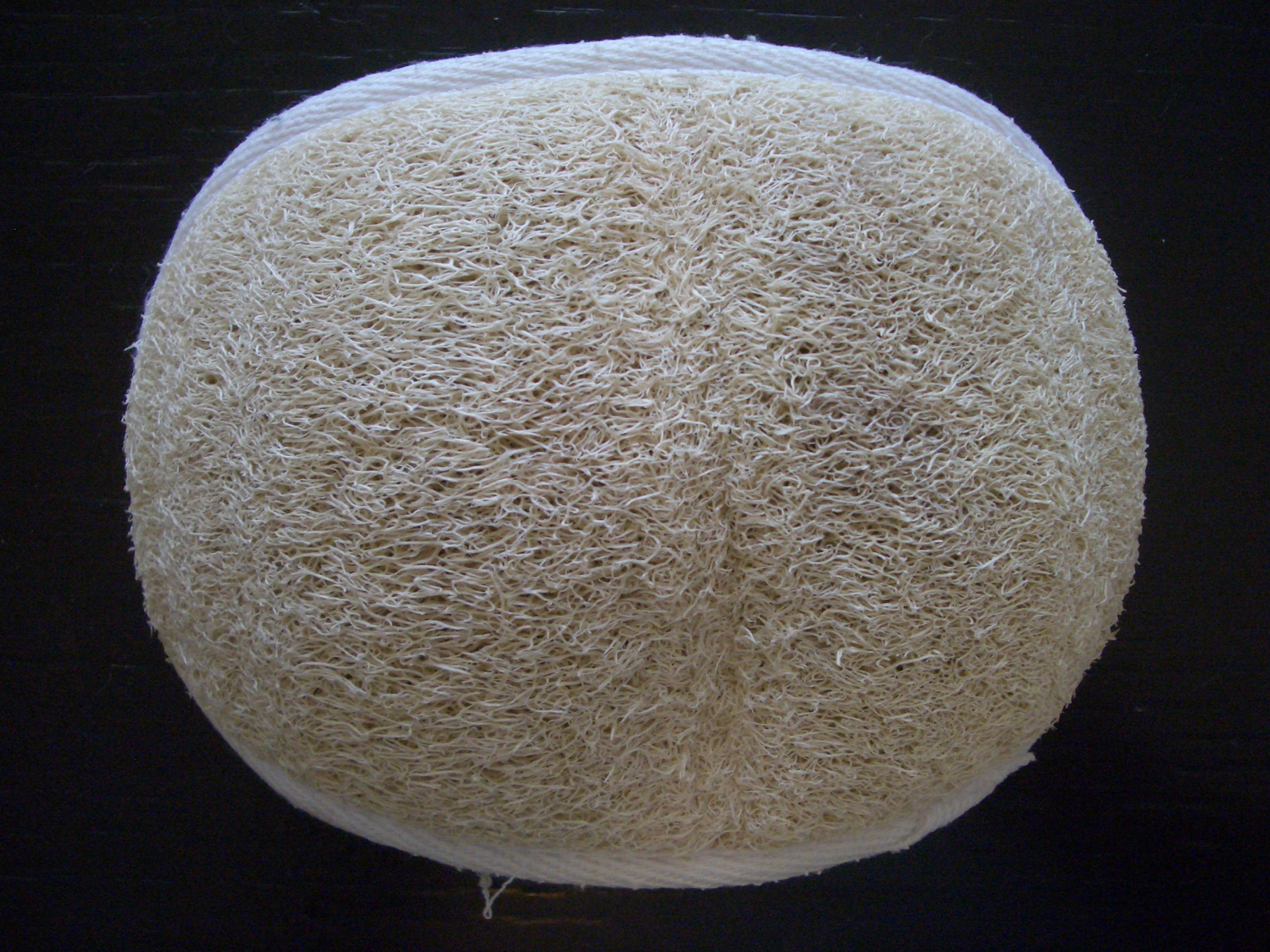
PRODUCT Loofah bath sponges. HK$ 10-15
PRODUCT RATING Great for bathing and exfoliating dead skin. Washing with this scrub gives your skin a clean, refreshed feel. May feel a bit rough on the skin the first few times you use it. The slim profile and an elastic strap on the back makes it easy to hold.
GREEN RATING Quite Green. Made from a natural vegetable fiber, instead of petrochemicals, the pad itself is made of a sustainable material. It is trimmed with some terry cloth, cotton trimming and an elastic strap. When thrown away, most of it should biodegrade quite easily.
WHERE TO BUY IT A little stall in the Sham Shui Po market. Sasa occasionally sells them. Also available on Taobao.
If you use nylon mesh puffs or synthetic bath sponges, you may want to consider trying this natural loofah bathing pad instead. It is made from the fibers of the loofah plant, also known as a gourd, that is grown by farmers in Asia.
It has a coarse texture that stimulates the skin but may take some getting used to. It scrubs off dead skin and works especially well on rough patches. After using it, your skin feels super clean and revitalized. I have come to enjoy the coarse feel especially after a good sweat. Continue reading “Clean and Reinvigorated Naturally”
Are you mosquito bait?

PRODUCT & PRICE Lemon grass oil from Taiwan HK$62
PRODUCT RATING Safe and very effective. Rub it liberally on all exposed skin (use alot) and you’ll rarely get bitten. Needs to be re-applied after a couple hours. Has a strong smell – some people like it, others don’t.
GREEN RATING Quite green. Chemical free. Made of plant-based essential oils. Packaged in a re-fillable glass spray bottle. Completely bio-degradable leaving no trace in the environment.
AVAILABLE AT Health Aims
There is nothing more annoying when you’re enjoying a hike on a nice day than being bitten by mosquitoes. Since I spend a lot of time outdoors, I’ve tried many of the mosquito repellents on the market. Here is a review of the repellents most commonly found on store shelves.
DEET
The active ingredient in most insect repellents is DEET. It is the most effective insect repellent, but there are human health and environmental concerns associated with its use. According to the US EPA, DEET is slightly toxic to birds, fish and aquatic invertebrates. The overall impact of use on the environment is limited because it is applied only to skin and clothing. However, the production of chemicals such as DEET is inherently environmentally unfriendly.
Of greater concern may be the effect of DEET on humans and this is where it gets more complicated. While deemed safe when used in accordance with instructions, incorrect application can lead to health issues such as skin irritation, disorientation, dizziness and, in extreme cases, seizures or death. According to Cornell University study “Everglades National Park employees having extensive DEET exposure were more likely to have insomnia, mood disturbances and impaired cognitive function than were lesser exposed co-workers”. In 2002, citing human health reason, Health Canada barred the sale of insect repellents for human use that contained more than 30% DEET. The environmental group Beyond Pesticides, lists DEET as neurotoxin. For both environmental and personal health concerns, I avoid all repellents containing chemicals.
PATCHES and WRIST BANDS
I have found that these patches and wrist bands don’t work because they only cover very small areas effectively – mosquitoes will inevitably bite you where you don’t have a patch or wristband. Continue reading “Are you mosquito bait?”
BYO Chopsticks to Reduce Deforestation

PRODUCT Portable chopsticks with case
PRODUCT RATING Very Good. These single-piece, portable chopsticks by muji require no assembly. The chopsticks and case are easy to clean. However, some may have difficulty adjusting to slightly shorter length. Like most of muji’s products, they are relatively high quality and well designed. Made of plastic.
GREEN RATING Light Green. Single-use, disposable chopsticks are a huge problem adding to the plague of regional deforestation. If you use disposable chopsticks while eating lunch at your desk or at sushi restaurants, try bringing a pair of your own. In addition to deforestation, there are also other health and environmental issues associated with using and disposing of single-use chopsticks.
AVAILABLE AT muji. You can also find other portable chopsticks in stores throughout Hong Kong.
Do you use disposable chopsticks to eat lunch at your desk? Or enjoy sushi at places that provide disposable chopsticks? You may want to consider bringing your own for the sake of the planet and your own health. According to the NY Times:
Due to lax enforcement of productions standards in China, disposable chopsticks also pose other risks for consumers and the environment:
Industrial-grade sulfur, paraffin, hydrogen peroxide and insect repellent are among the harmful chemicals that Chinese media investigations have exposed during production. Paraffin is a known carcinogen, and hydrogen peroxide can harm the digestive system. Chopsticks irresponsibly disposed of can contaminate water and soil quality. Continue reading “BYO Chopsticks to Reduce Deforestation”
BYOB to the Bakery

PRODUCT Locally made baked goods
PRODUCT RATING Delicious. Factory-made baked goods from the major chains (Maxims, etc) just can’t compare with the warm taste of fresh-from-the-oven buns made by your neighborhood baker.
GREEN RATING Quite Green. Neighborhood bakeries don’t pre-package their buns in plastic bags, meaning you can bring-your-own-bag (BYOB). Switching to locally baked buns also reduces air pollution. Explained below.
Walking around Hong Kong, you see bakeries literally on every block. This makes getting a tasty bite to eat very convenient. However, due to the unsustainable practices of the major bakery chains, there is a very heavy cost inflicted on the environment. In 2009 (when the plastic bag levy came into effect), bakeries were responsible for 262 million plastic bags ending up in the landfill. A year later, that increased to 370 million bags, an increase of 21%. The ineffectual plastic bag levy exempted many retail categories, including bakeries. Seeing the writing on the wall, many bakery chains decided to “pre-package” their buns in order to circumvent the anticipated future expansion of the bag levy to the previously excluded categories. This is an example of a well intentioned, but poorly executed legislation causing more harm than good (we need a levy on ALL plastic bags).
Most bakery chains in Hong Kong do not produce their baked goods on site. They are produced in factories and then delivered all over Hong Kong. This business model reduces cost and allows the chains to capture economies of scale in production. But the taste of factory made buns just can’t compare with ones freshly out of the oven from your neighborhood bakery. The buns at some of the chains taste like they are made of sugar-coated cardboard. For me, nothing beats a warm, fresh-from-the-oven bun.
This centralized production model results in delivery trucks driving around Hong Kong every day adding to our already dismal air pollution. In contrast, your local neighborhood bakery probably has ingredients delivered once a month, resulting in a lower carbon footprint and reduced air pollution.
When buying baked goods, I would encourage you to try the following in order to reduce the environmental impact:
1. Buy from your neighborhood bakery that bakes its goods onsite. This will support local enterprises while also reducing air pollution in Hong Kong. Continue reading “BYOB to the Bakery”
 Go Green Hong Kong