
Cost Benefit Analysis of Golf

Golf has been in the news recently because it has been proposed that the government take back the land that the Hong Kong Golf Club (The Club) sits on to develop housing. It is argued that it would be preferable to eliminate the golf course rather than relocate villages and destroy farmland. In order to ascertain the validity of this assertion, we should examine the costs versus the benefits of golf.
BENEFITS
The benefits of golf have been clearly articulated by the local golfing community as they seek to justify the taxpayers continued subsidy of their exclusive, members only Club:
BUSINESS
In a recent SCMP article, a representative of The Club justified its existence on the basis that Hong Kong is an international business centre and golf plays a big role in business (lots of business gets done on a golf course). As a professional starting out in my career, I remember how golf was a constant topic of conversation around the office. Many of my bosses were avid golfers and corporate events were often golf trips followed by BBQ dinners. So yes, I do believe there is a connection between golf and business. It might be a stretch however to call it an important one. There has been no research that links golf to economic development (as there is with education, infrastructure and the rule of law). If there were, Scotland and Thailand would be business superpowers today.
OLYMPICS
William Chung Pui-lam, president of the Hong Kong Golf Association, said growth of the game – recently made an Olympic sport – would suffer if the Hong Kong Golf Club’s three-course, 170-hectare facility at Fanling were lost to housing. Bobsledding is an Olympic sport, and its development is also suffering due to lack of venues in Hong Kong. Perhaps we should also dedicate public resources to its development?
THE RICH LIKE GOLF
Another housing adviser, Lau Ping-cheung, said the land use of golf courses should be reviewed together with all other private recreational clubs. “But we need to discuss and understand the possible social impact, because Hong Kong is an open city with lots of rich people and foreigners who might be interested in golf.” Rich people also like private jets, perhaps we should subsidize runways for private jets as well?
THE PRESENCE OF DOMINIQUE BOULET
Golf commentator Dominique Boulet, a former Hong Kong representative and a member of the club for almost 30 years, said: “If we lost the Hong Kong Golf Club, I’m not sure I would live here any more.” I never realized how much I would miss Mr. Boulet until he threatened to leave. In fact, I had never heard of him before he made this statement to the SCMP.
COSTS
PESTICIDE USE
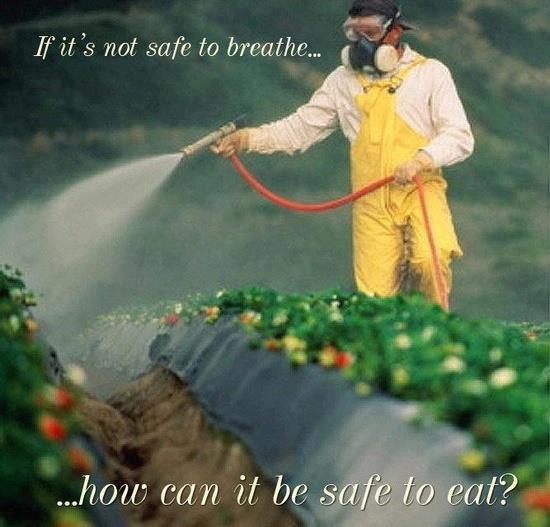
NY States Attorney General’s office published a report entitled Toxic Fairways. The report, which was particularly concerned with the potential for groundwater contamination, concluded that these [NY] golf courses applied about 50,000 pounds of pesticides in one year, or four to seven times the average amount of pesticides used in agriculture, on a pound per acre basis. Pesticide and fertilizer runoff contaminates ground water, poisoning both humans and wildlife.
It is quite ironic, the number of golf charity events held to raise money for cancer research when there is evidence of major excesses of non-Hodgkin’s lymphoma, brain, colorectal and prostate cancers in golf course maintenance workers and superintendents exposed to high concentrations of carcinogenic herbicides and fungicides. The cost of cancer treatment for golf course workers will undoubtedly be borne by the taxpayer funded public healthcare system.




 Go Green Hong Kong