Rooftop Farming in Hong Kong

This article was updated in January 2016. Urban farming on rooftops has been gaining traction in cities around the world. Its rise can originally be traced to consumers increasing awareness of carbon emissions that result when our food travels hundreds, if not thousands of miles from the farm to our table. As an experienced urban farmer that grows on the rooftops of commercial buildings such … Continue reading Rooftop Farming in Hong Kong

Economic Growth is Good…or is it?

DSC_0007

“Only by maintaining Hong Kong’s stability can we sustain our economic prosperity. Only by sustaining Hong Kong’s prosperity can we improve people’s livelihood.” CY Leung July 1, 2014

This quote encapsulates the argument of the pro-China business groups in Hong Kong.  Their argument is two-fold: (1) that transitioning to a legitimate form of democratically elected government will cause instability and thus reduce economic growth, and (2) that economic growth is necessary to improve peoples lives. While we disagree with both, it is the second assertion that is relevant to the environment. It forms the justification for our most environmentally damaging behaviour.

This is the myth that we are setting out to debunk with some thought experiments. Thought experiments are favoured by scientist and philosophers, while complex models that are to a shocking extent unsubstantiated by empirical evidence are favoured by economists. (Disclosure: your author studied both economics and philosophy at the University of Toronto).

Look at the picture above. What do you see? Local residents sitting under a tree on a hot day? Wrong! That is a potential source of economic growth. Arborist’ could be employed to cut down the tree, drivers to transport it and factory workers to turn it into furniture or paper. It would then be transported back to a store to be sold by a clerk. At every stage of this “value creation” process, people are employed and income is earned resulting in economic growth. Continue reading “Economic Growth is Good…or is it?”

Summer Greens for Hong Kong

Screen Shot 2014-06-02 at 5.24.19 pm

GGHK Editors Note: Eating local, seasonal vegetables has numerous benefits for both our health and the environment. We benefit from fresher vegetables that are more nutritious and contain fewer pesticides. Cultivated in the right season, plants grow more vigorously making them less susceptible to pests and diseases. By eating seasonally, we can help conventional farmers reduce their use of harmful chemical pesticides. Our usual leafy greens: lettuce, spinach, pak choi, choi sum and kai lan are cool season crops that don’t grow well in the summer.   

The article below was contributed by Joshua Keil, a registered dietitian, with a special interest in food security, and community health. Joshua has experience working with groups and individuals to achieve their nutrition goals in a wide range of conditions including chronic illness, weight loss, and general healthy eating.

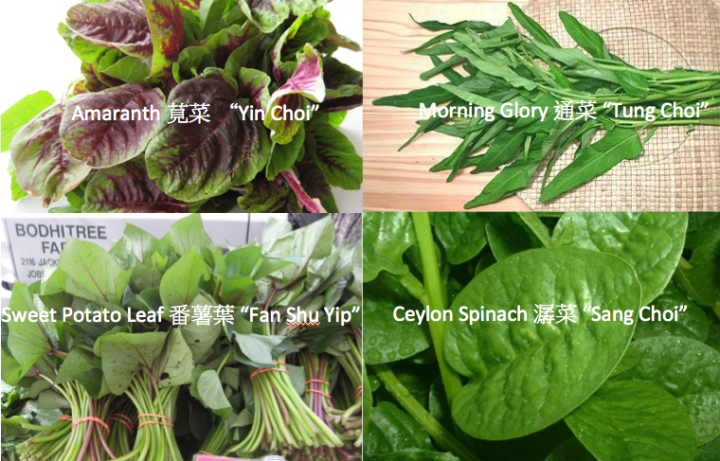
Ceylon Spinach, Amaranth (aka Chinese Spinach), Sweet Potato Leaf, and Morning Glory (aka Kangkong) are all dark leafy green vegetables that can be grown in the hot Hong Kong summer. Like many leafy greens, they are very nutritious and should be included regularly in your diet.

All are great sources of Vitamin A, which helps maintain healthy skin, hair, and tissue, improve dim light vision, and new cell growth.

Magnesium is another mineral these plants contain in abundance. It is important in maintaining healthy bones & teeth, maintaining nerve function, and recently has been found to play an important role in blood sugar regulation.

Finally, folate is found in large quantities in all of these vegetables. It can help maintain normal digestion, and is crucial in red blood cell production. Folate deficiency can lead to fatigue and anemia.

We should note that spinach and amaranth (both belong to the same plant family) have popularly been labeled as good sources of iron and calcium (thanks Popeye). However the presence of oxalates, especially in amaranth, make absorbing these two minerals very difficult. You should not rely on these vegetables for these two important minerals, but these plants are still packed with nutrients and should be eaten often.

Nourishing the body through food, is a proven way to improve skin health, and overall wellbeing. Skin care, and other cosmetic products, promise results, but there is very little scientific research to back up those claims. Dark leafy greens, and other fruits and vegetables, provide a wide range of nutrients that keep our bodies healthy from the skin inwards.

Another advantage of consuming these vegetables during the summer months is that they are good replacements for more common Chinese greens, such as Pak Choi and Choi Sum, that are imported from mainland China, where pesticide use is out of control. According to a 2013 Greenpeace report, Mainland China uses more pesticides than any other country in the world, and produce analyzed from several grocery stores contained up to 10 different chemicals on a single item. Being able to purchase local, preferably organic, produce can help us avoid these toxic chemicals.

Since these four vegetables can all be grown locally in summer, it is much less likely they will contain the cocktail of pesticides that can be found on some mainland produce. Even better, seek out farmers that grow food organically, meaning that they don’t use any chemical fertilizers or pesticides. Continue reading “Summer Greens for Hong Kong”

Water for Free~ Android app is now available for download!

GREEN RATING Deep Green. Bring your own bottle. Water for Free is a mobile app (iPhone and Android) and website that shows the locations of public water fountains and dispensers throughout Hong Kong. It is an effort to reduce the vast amounts single-use beverage containers entering our landfills and oceans everyday. According to the 2011 Waste Statistics issued by the Environmental Protection Department (EPD), Hong Kong … Continue reading Water for Free~ Android app is now available for download!

A Delicious Irony

Hydroponics is a method of growing plants using mineral nutrient solutions, in water, without soil. In a recent Mingpao article titled “Farming can make money”, the purveyors of hydroponically grown produce tout many of its impressive benefits. Chief among them was food safety.  They rightly point out that much of China’s land is contaminated and its fresh water is polluted. This jeopardises our food safety since most of … Continue reading A Delicious Irony

Year End Carbon Review

Another year has come and gone. This makes it a good time to review our personal impact on the environment. While we may all proclaim our love of nature and all the beautiful creatures, nice sentiments are not nearly enough. That time has passed, climate change is upon us. We need to be driven by facts, data and most importantly personal accountability. If we want … Continue reading Year End Carbon Review

Just Right

PRICE HKD $25 for 600ml size PRODUCT RATING Just Right. Low price. Lightweight. Textured side panel (with the Rubbermaid logo) makes it non-slip. The side is slightly flattened and indented to fit ergonomically in your hand. The large screw-on cap and simple design makes it very easy to clean. The flip-top provides fast, easy access and is just the right size allowing you to drink quickly … Continue reading Just Right

Permaculture

permaculture_image

SUSTAINABILITY FACTS ABOUT HONG KONG

  • Our reservoirs have a capacity of 120-150 cubic meters of water per person per year.  The UN considers regions with less than 500 cubic meters per person to be water stressed.
  • Our electricity comes primarily from unsustainable coal, natural gas and nuclear power. Converting to renewable energy is a process that will take many decades, requiring more time than we have if we hope to avoid catastrophic climate change.
  • Our landfills will be full by 2017. 40% of the garbage going to our landfill is food waste.
  • Over 95% of our food is imported, the majority coming from the mainland. 70% of mainland surface water is polluted. The area of land contaminated by heavy metals has been classified a state secret.

On the one hand we may feel overwhelmed by these facts, and the state of gridlock in Hong Kong’s political system may cause us to just throw up our hands. On the other hand, can we rely on bureaucratic governments, quarterly profit-driven corporations or ineffective NGO’s to solve these issues? Instead, can citizens band together to work on local, small scale solutions that may bring about the seeds of change?

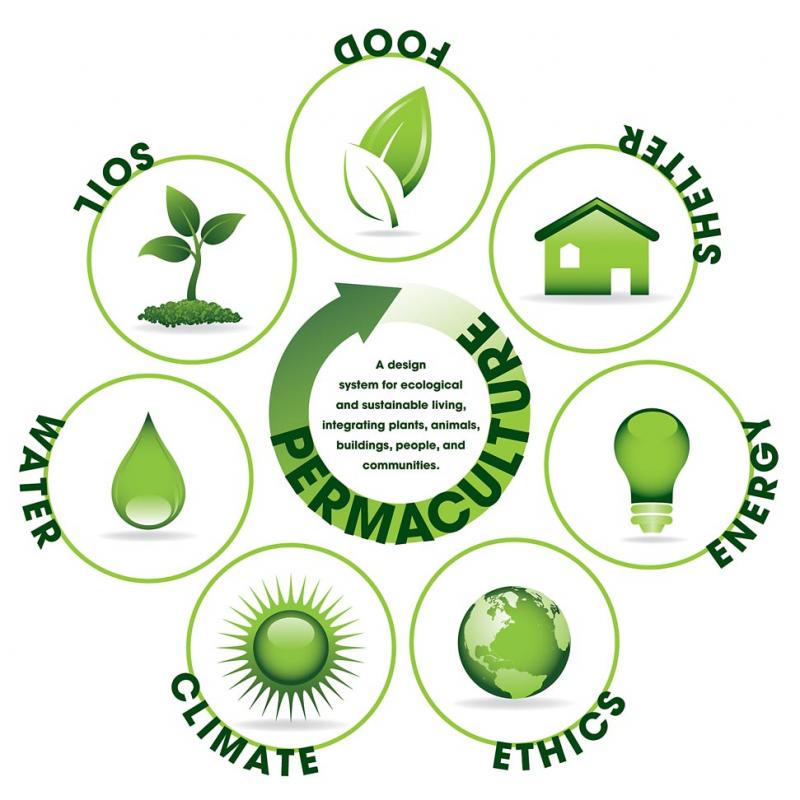
Permaculture courses create a forum for specialists and non-specialists alike to discuss, design and most importantly build small scale solutions to ecological problems. Unlike traditional education, it is active, field-based and hands on. Working together in teams guided by an instructor, participants learn about ecology and design solutions that are modelled on natural systems and based on the following core principles:

  • Care of the earth: Provision for all life systems to continue and multiply. This is the first principle, because without a healthy earth, humans cannot flourish.
  • Care of the people: Provision for people to access those resources necessary for their existence.
  • Return of Surplus: Reinvesting surpluses back into the system to provide for the first two ethics. This includes returning waste back into the system to recycle into usefulness.

The government’s solution to our water deficit is to import water from the mainland. As economic growth on the mainland drives ever increasing demand for water, we will face greater competition for this water. The permaculture solution is to instead apply the ancient technique of rainwater harvesting. During the rainy season, water is collected and stored in tanks to be used when water is scarce. This gravity-fed system not only reduces the need for imported water but also reduces electricity consumption (4% of total electricity consumption globally is used to pump and treat water).

To address our energy and climate change issues, environmentalists promote converting to renewable energy. However, due to factors such as the high water vapour content and pollution in the air, the efficiency of solar panels in Hong Kong is quite low. With limited land, wind farms would need to be located in the ocean, an extremely expensive proposition.

Permaculture instead advocates energy conservation by designing and retrofitting buildings with passive cooling. Continue reading “Permaculture”

Technology is the Answer…or is it?

Screen Shot 2013-08-02 at 9.12.55 PM

In 50 years, every street in London will be buried under nine feet of manure.

The London Times, 1894

Most of us by now are aware of the challenges we will face in coming decades – climate change, water shortages and mass extinction of species to name a few. Many believe that technology will solve all these problems. That we can continue to consume as usual because human ingenuity will, as it always has, find technological solutions to our most pressing problems. Lets review the four most important technological innovations of the last century to find out if our faith is warranted.

THE GREEN REVOLUTION

Thomas Malthus predicted that overpopulation would result in widespread poverty, famine and war. Population did grow from 1 billion in the 1800’s to 7 billion today. However, food production also grew rapidly as a result of a set of technological innovations, known as the green revolution. The hunger and poverty that Malthus predicted never came to pass (at least for those lucky enough to be born in the developed world). The key elements of the green revolution were hybrid seeds, chemical pesticides and synthetic fertilisers. They are the foundation that makes the modern world possible by freeing up people from having to grow their own food. They are also the source of some of the most serious environmental problems today.

The petrochemical fertilisers are causing vast dead zones in our oceans and rivers. Chemical pesticides are contaminating our soil and water, and causing the loss of biodiversity. Hybrid and GM crop varieties produce increased yields, but require much greater inputs of water and fertiliser. The irrigation required to grow high yield varieties is resulting in the alarming depletion of ground water. According to Lester Brown, our current farming practices based on the green revolution, are now a threat to world food security.  The solution has now become the problem.

ANTIBIOTICS

Before the invention of antibiotics, everyday ailments commonly resulted in unimaginable pain or even death. All the surgeries conducted today are made possible only by antibiotics. However, most of us are unaware of the fact that over 60% of all antibiotics produced are not consumed by humans.  Instead, they are being fed to livestock not to prevent disease but to enhance growth, so we can buy cheap meat. As a consequence of this widespread use, drug resistant bacteria are proliferating.

A recent Australian report says there is ‘a genuine threat of humanity returning to an era where mortality due to common infections is rife’. According to Australia’s top scientist, the overuse of antibiotics is threatening to return us to a world where deaths result from minor ailments such as sore throats and cut knees. England’s chief medical officer, Dame Sally Davies, warned in a March report that untreatable infections posed a “catastrophic threat” to the population.

ENGINE

In the 1900’s, there was a horse-manure crisis. In New York, a population of 100,000 horses was producing 2.5 millions pounds of manure a day. The streets were covered with manure and air was thick with flies. The technological solution came in the form of cars and buses powered by fossil fuel. The manure crisis was averted. Continue reading “Technology is the Answer…or is it?”