




Agri-Park

Here is our analysis of the new Agricultural Policy issued by the Hong Kong government.
The Pantheon
The government is proposing to spend HKD 7 billion to encourage the development and growth of the agriculture sector by establishing a 80 hectare “Agri-Park”. While this is all well and good, the first question we must ask is: what is the governments track record in nurturing sectors other than real estate? The Pantheon of government schemes that produce nothing (other than taxpayer funded or subsidised construction projects) includes: the Science Park, the EcoPark, a CyberPort, an Innocentre and numerous others.
No Pain No Gain
The government will acquire privately-owned agricultural land (including land within the country park zone) from landowners to build the Agri-Park. In a market economy, when supply is fixed and demand increases (due to the government entering the market as a large buyer), prices will rise. The resulting increase in land rental cost will in effect be detrimental to existing farmers. This scheme will hurt the farmers that it is purportedly trying to help.
In this case the pain will be borne by the farmers and gain will be reaped by the construction industry, landowners and bureaucrats.
Innovative Bureaucrats: An Oxymoron
A farmer’s investment is largely comprised of his time and effort in improving the land. Through weeding, cultivation, and enrichment of the soil a farmer creates an environment optimal for plant growth. Unlike a software company incubated in a technology park, the farmer cannot simply move. This scheme can only have been thought up by “innovative” bureaucrats whose experience of farming consists largely of playing FarmVille. Continue reading “Agri-Park”

Cancer and Food
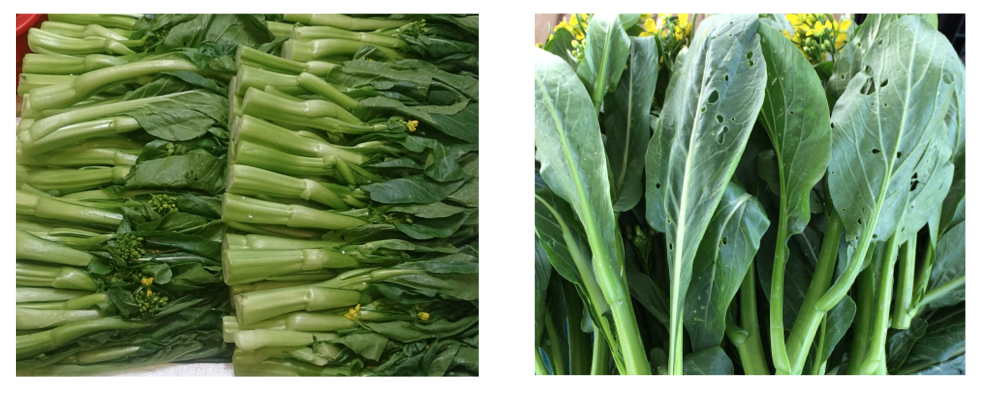
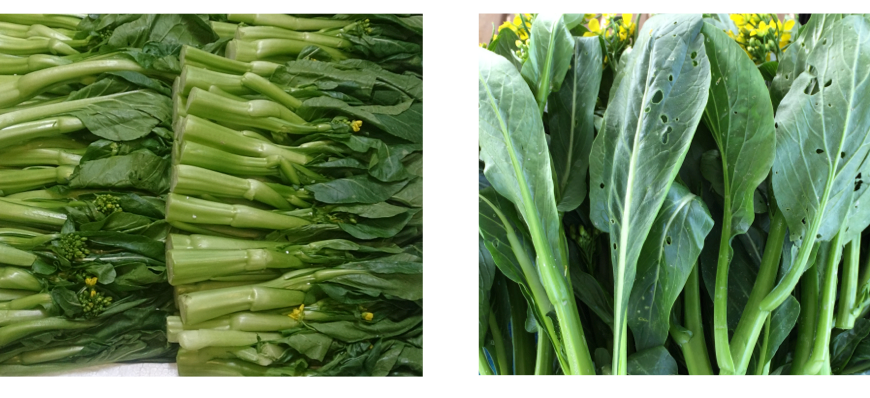
Can you guess which one is organic? Read on to find out
Many people exhibit a sudden interest in organic food when they or someone in their family has been afflicted with cancer. Are they just grasping for links or is there any factual basis for their concern that the way modern food is grown can contribute to cancer? Let’s review how conventional leafy green vegetables, such as Choi Sum or Bak Choi, are typically grown in Hong Kong. All the chemicals listed below are approved and readily available for sale in Hong Kong.
Step 1

Prior to growing a new crop, conventional chemical farmers spray a broad-spectrum systemic herbicide, such as Glyphosate, to kill weeds in the soil. “Broad-spectrum” means that it is effective against a wide a variety of plants – it is toxic not only to the weeds but also to the vegetables that will subsequently be planted. However, it’s concentration will have been diminished by the time the vegetables are planted. The residual toxicity will still weaken the vegetable. A weaker plant is more susceptible to pests and disease. As such, farmers need to apply higher quantities of pesticide later on to protect the crop from insect attacks.
Grow Your Own Greens

As an Urban Farming and Horticulture instructor in space deprived Hong Kong, I’m often asked about using the much hated bay windows common in many Hong Kong apartments for growing vegetables. The main considerations growing edible plants indoors are limited space, light and airflow. I set out to design a highly functional indoor growing system that would not only address these issues, but also be sustainably built and have a minimalist aesthetic.
The key factor limiting the growth of edible plants indoors is lack of sunlight. Artificial light, while very helpful, creates two issues of its own. First, it consumes electricity, thereby reducing some of the environmental benefits of growing your own vegetables. Second, they must be placed at the correct distance from the plants to be effective (in addition, the correct colour bulb must also be used).
After 18 months of research and tinkering, I came up with the idea of inverting the usual relationship between the artificial light and the plants. Instead of placing the lights over the plants, I surrounded the light with plants. Light from a bulb shines in all directions. By surrounding the bulb with plants I was able to capture and make use of a much higher percentage of the light emitted by the bulb. This maximises the number of plants that can be grown, while at the same time ensuring that the plants are at an optimal distance from the bulb.
An additional benefit of this design is that the light emitted from the bulb can help our plants grow and at the same time light up our home or office. The leaves of the plant in effect act as a living lamp shade. Continue reading “Grow Your Own Greens”
Don’t Get Cheated Buying “Local” Produce
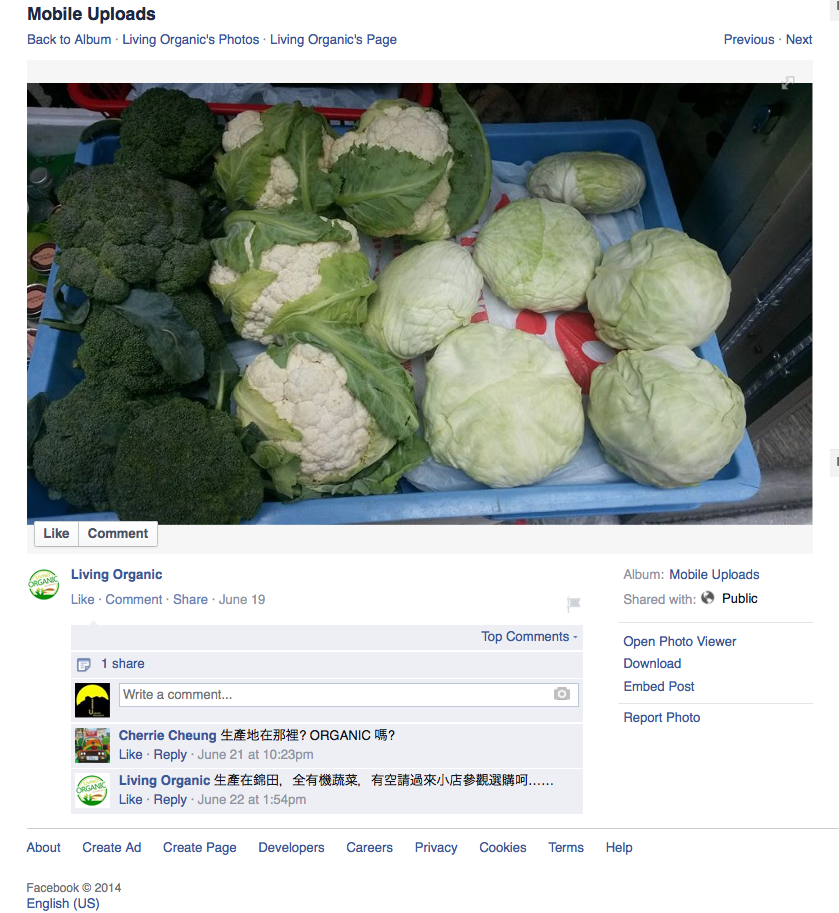
Due to food safety concerns, some consumers are willing to pay a premium for local organic produce. With almost no manufacturing taking place in Hong Kong, there is little need to worry about local produce being grown in contaminated soils. In addition, many local organic farms have their soil and water tested regularly by the AFCD. Purchasing organic produce alleviates consumer concerns about pesticides.
In spite of these advantages, Hong Kong producers are still only able to capture a tiny sliver of the vegetable market. There are two primary reasons for this. First, high land and labor cost makes local production uncompetitive. Second, Hong Kong’s warm season, from April/May to September/October, is unsuitable for producing some of the most popular vegetables such as carrots, broccoli, cauliflower, celery, spinach, beets, tomatoes and lettuce.
In this highly competitive market, some sellers can earn more if they have these popular vegetables for sale when other sellers do not. Unscrupulous sellers may therefore try to pass off produce imported from the mainland as locally grown in order to gain a competitive edge. Continue reading “Don’t Get Cheated Buying “Local” Produce”
The Quiet Hero
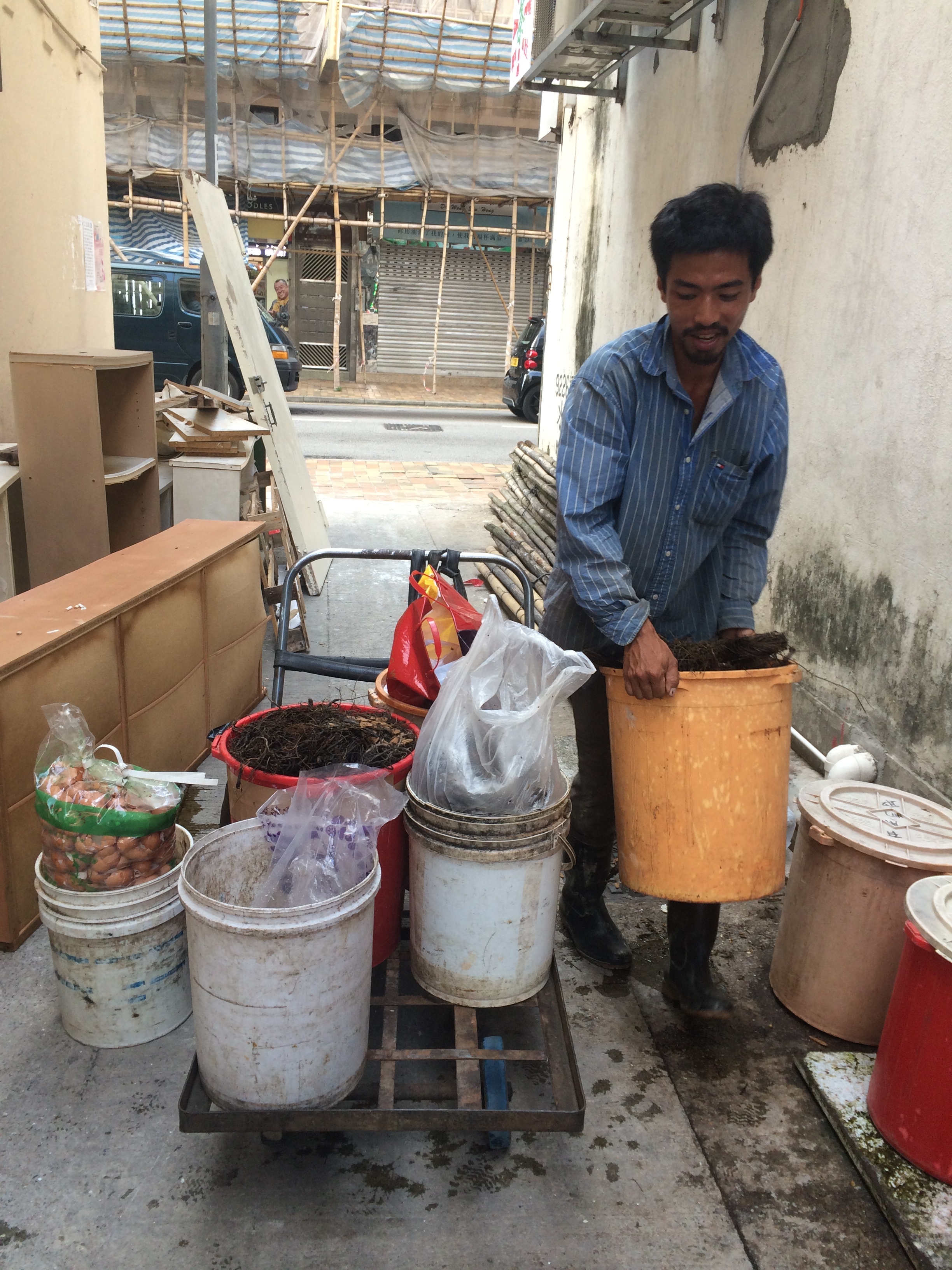 Everyday, after finishing his field work at Mapopo community farm, Farmer Chi Ho can been seen collecting food waste from local restaurants and drink shops around Leun Wo Hui. He brings 100kg of egg shells, shredded coconut, soya meal, tea and coffee grounds back to the farm where it is composted and turned into organic plant nutrients used to grow vegetables. Since he works every day, this amounts to Herculean 3 tons per month of reclaimed waste.
Unlike the organic vegetables grown at Mapopo, most of the food we eat today is grown on large scale industrial farms, and shipped from hundreds if not thousands of miles aways. Our food waste, instead of being recycled back into plant nutrients, is discarded into the landfill.
According to government statistics, food waste constitutes 36% of total landfill waste. Hong Konger’s generate 1.99kg of waste per person per day (in Japan it is 1.71kg, Singapore 1.49kg, and South Korea 1.24kg) and our landfills will be full in a couple of years. The governments position is that this requires a massive expansion of landfills that are vigorously opposed by the public, the building of unpopular incinerators and a few token food waste processing plants. Places such as Japan, Korea, Singapore and Taiwan have experienced decreases in landfill waste with the implementation of municipal waste charging fees and recycling programs. These common sense measures, while supported by the public, are opposed by the powerful business interests that select our political leaders.
Landfill expansion is only half the story when food waste is dumped into a landfill. When organic matter, such as food waste, enters our landfill it decomposes anaerobically. This results in the release of methane, a greenhouse gas 20 times more efficient at trapping heat than CO2. Continue reading “The Quiet Hero”
The Business of (Urban) Farming
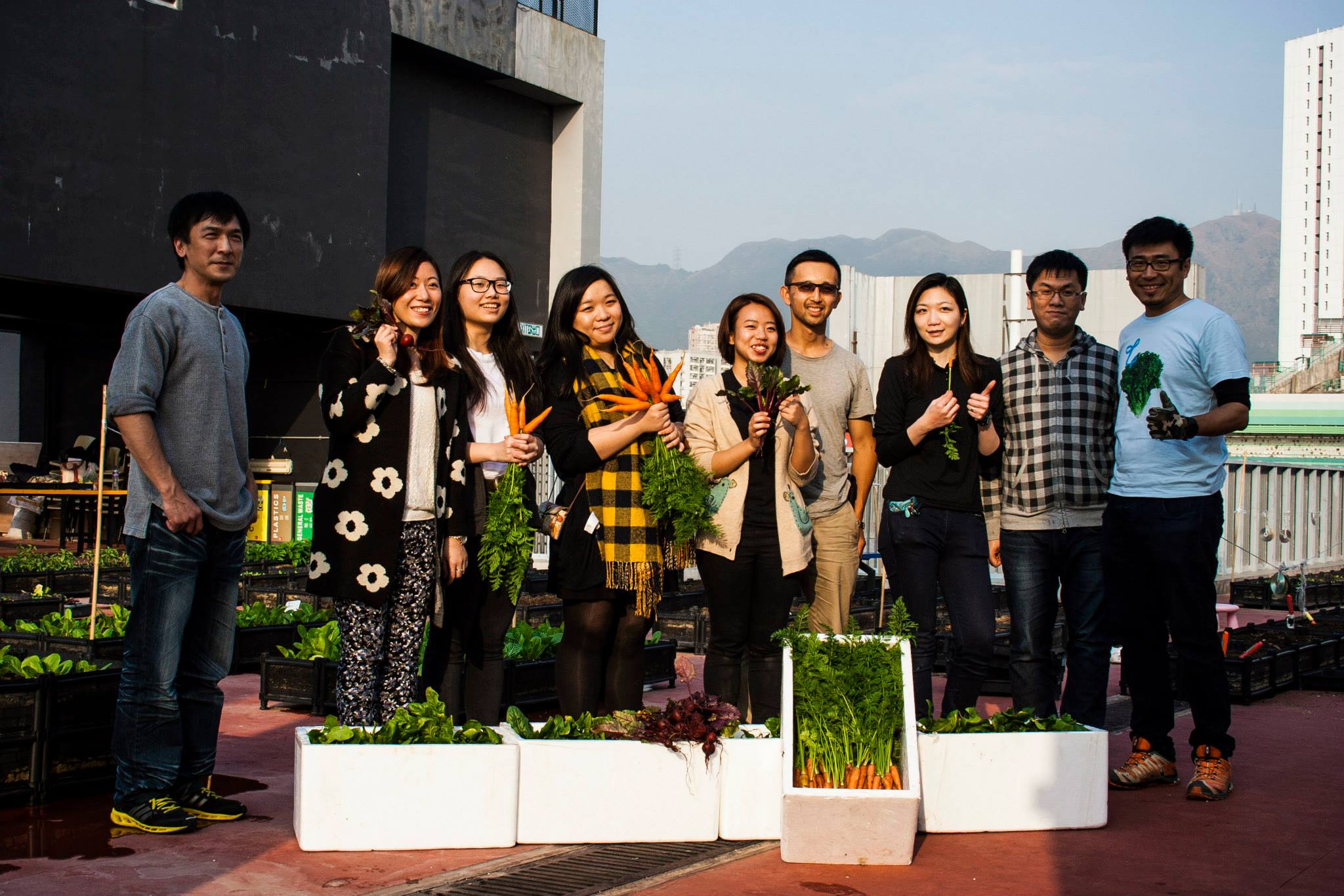
In a previous article we explored the benefits of urban farming in Hong Kong. The term “urban farming” is commonly used to describe what is in fact gardening – a leisure activity for city dwellers whose hobby is growing vegetables. Farming on the other hand is an industry focused on the production of food. As such, is has entirely different objectives, requirements, scale, methods and business models. Urban farming is subject to the same market forces that affect traditional field farming.
Urban farming, in the food production sense, faces two types of challenges: business and technical. The technical or horticultural challenges unique to urban farms include overcoming the limitations and micro-climate conditions specific to rooftops – which we will explore in the future. Here, we will address only the business challenges. These include (but are not limited to): government policy and space, financing and the business environment, and skilled labour and supplier base.
GOVERNMENT POLICY AND SPACE
The first challenge to farming of any kind is securing space. Government policy in Hong Kong explicitly and implicitly favours the property development sector. By definition, it does so at the expense of other sectors such as agriculture. Policies that favour property development encourage speculative, short-term investments that push farmers out of even rural land markets.
Urban farming could theoretically side-step these speculative side effects by putting to use rooftops that have virtually no other use. Unfortunately, the gap in rent between what would be sufficiently financially rewarding for a landlord and what would be financially sustainable for a farmer is simply too large to bridge. Continue reading “The Business of (Urban) Farming”
The Pursuit of Love, Success and Happiness

Steve Jobs, Mark Zuckerberg, Albert Einstein, Barak Obama, Dean Kamen, Karl Lagerfeld, Carolina Herrera, Tom Ford, Marc Jacobs, Vera Wang, Micheal Kors, Tom Wolfe, Stanley Kubrick, Andy Warhol
What do all these accomplished people have in common? They are not pursuing the latest fashion trends and basically wear the same thing all time.
Hong Kong government statistics show we create 293 tons of textile waste per day. While this is in itself astounding, what is even more vexing is how counterproductive it all is. The purpose of this consumption is ostensibly to make us feel more confident and create a memorable impression. Ultimately helping us find love, success and live the good life. Unfortunately, the pursuit of the latest trends has two huge drawbacks. Continue reading “The Pursuit of Love, Success and Happiness”
Rooftop Farming in Hong Kong
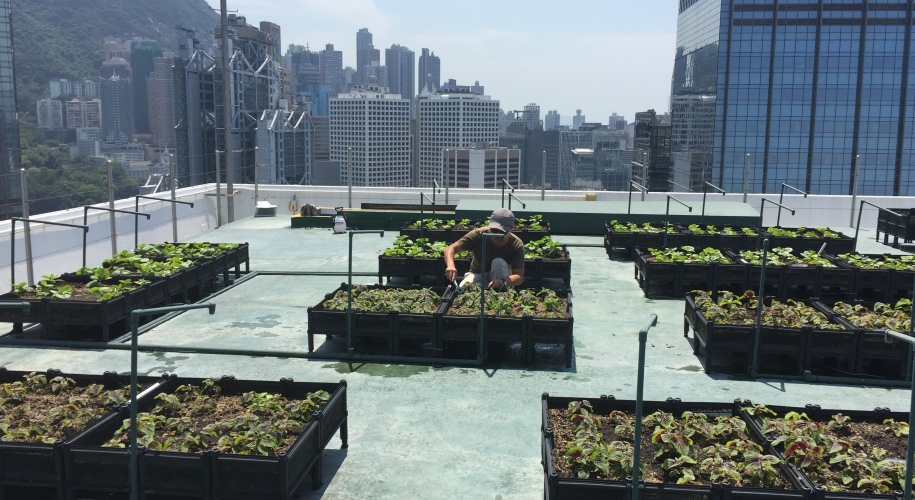
This article was updated in January 2016. Urban farming on rooftops has been gaining traction in cities around the world. Its rise can originally be traced to consumers increasing awareness of carbon emissions that result when our food travels hundreds, if not thousands of miles from the farm to our table. As an experienced urban farmer that grows on the rooftops of commercial buildings such … Continue reading Rooftop Farming in Hong Kong
Economic Growth is Good…or is it?

“Only by maintaining Hong Kong’s stability can we sustain our economic prosperity. Only by sustaining Hong Kong’s prosperity can we improve people’s livelihood.” CY Leung July 1, 2014
This quote encapsulates the argument of the pro-China business groups in Hong Kong. Their argument is two-fold: (1) that transitioning to a legitimate form of democratically elected government will cause instability and thus reduce economic growth, and (2) that economic growth is necessary to improve peoples lives. While we disagree with both, it is the second assertion that is relevant to the environment. It forms the justification for our most environmentally damaging behaviour.
This is the myth that we are setting out to debunk with some thought experiments. Thought experiments are favoured by scientist and philosophers, while complex models that are to a shocking extent unsubstantiated by empirical evidence are favoured by economists. (Disclosure: your author studied both economics and philosophy at the University of Toronto).
Look at the picture above. What do you see? Local residents sitting under a tree on a hot day? Wrong! That is a potential source of economic growth. Arborist’ could be employed to cut down the tree, drivers to transport it and factory workers to turn it into furniture or paper. It would then be transported back to a store to be sold by a clerk. At every stage of this “value creation” process, people are employed and income is earned resulting in economic growth. Continue reading “Economic Growth is Good…or is it?”
Summer Greens for Hong Kong

GGHK Editors Note: Eating local, seasonal vegetables has numerous benefits for both our health and the environment. We benefit from fresher vegetables that are more nutritious and contain fewer pesticides. Cultivated in the right season, plants grow more vigorously making them less susceptible to pests and diseases. By eating seasonally, we can help conventional farmers reduce their use of harmful chemical pesticides. Our usual leafy greens: lettuce, spinach, pak choi, choi sum and kai lan are cool season crops that don’t grow well in the summer.
The article below was contributed by Joshua Keil, a registered dietitian, with a special interest in food security, and community health. Joshua has experience working with groups and individuals to achieve their nutrition goals in a wide range of conditions including chronic illness, weight loss, and general healthy eating.
Ceylon Spinach, Amaranth (aka Chinese Spinach), Sweet Potato Leaf, and Morning Glory (aka Kangkong) are all dark leafy green vegetables that can be grown in the hot Hong Kong summer. Like many leafy greens, they are very nutritious and should be included regularly in your diet.
All are great sources of Vitamin A, which helps maintain healthy skin, hair, and tissue, improve dim light vision, and new cell growth.
Magnesium is another mineral these plants contain in abundance. It is important in maintaining healthy bones & teeth, maintaining nerve function, and recently has been found to play an important role in blood sugar regulation.
Finally, folate is found in large quantities in all of these vegetables. It can help maintain normal digestion, and is crucial in red blood cell production. Folate deficiency can lead to fatigue and anemia.
We should note that spinach and amaranth (both belong to the same plant family) have popularly been labeled as good sources of iron and calcium (thanks Popeye). However the presence of oxalates, especially in amaranth, make absorbing these two minerals very difficult. You should not rely on these vegetables for these two important minerals, but these plants are still packed with nutrients and should be eaten often.
Nourishing the body through food, is a proven way to improve skin health, and overall wellbeing. Skin care, and other cosmetic products, promise results, but there is very little scientific research to back up those claims. Dark leafy greens, and other fruits and vegetables, provide a wide range of nutrients that keep our bodies healthy from the skin inwards.
Another advantage of consuming these vegetables during the summer months is that they are good replacements for more common Chinese greens, such as Pak Choi and Choi Sum, that are imported from mainland China, where pesticide use is out of control. According to a 2013 Greenpeace report, Mainland China uses more pesticides than any other country in the world, and produce analyzed from several grocery stores contained up to 10 different chemicals on a single item. Being able to purchase local, preferably organic, produce can help us avoid these toxic chemicals.
Since these four vegetables can all be grown locally in summer, it is much less likely they will contain the cocktail of pesticides that can be found on some mainland produce. Even better, seek out farmers that grow food organically, meaning that they don’t use any chemical fertilizers or pesticides. Continue reading “Summer Greens for Hong Kong”
 Go Green Hong Kong