The Original Non-Stick

PRODUCT Cast iron skillet

PRICE HK$80 for the 10.5″ pan

PRODUCT RATING Excellent for pan-frying, braising, searing and sauteing (and quite possibly as a weapon …it is very, very heavy). Due to the excellent heat diffusion and retention properties, you can get that sizzling golden brown, teppanyaki effect that just can’t be duplicated on a non-stick pan. I think it would be great for searing meat, although I haven’t tried it myself, as I stopped cooking meat a few years ago.

GREEN RATING Deep Green. I’ve only owned it for a short time, but have a feeling that it will last forever. This is just so much greener than throwing a non-stick pan into the landfill every 6 months.

AVAILABLE AT We bought ours at a cookware shop on Shanghai Street (Yau Ma Tei MTR). There are various brands at different price ranges available at kitchen shops around the city.

Yvonne Chounard, Patagonia’s founder, defined a well made, well designed product as one that lasts a long time, is easily repaired and then finally breaks down in many places at the same time. For example, a pair of Levi’s lasts many, many years, but when its seen too many days, it gets holes in the knees, frays at the bottom, small change falls through the pockets all at the same time. He defined a poorly designed product as one where if one part breaks, the whole thing is trashed. For example, if one tiny part in our stereo, TV, or computer breaks we end up throwing the whole thing away.

Based on this definition, non-stick pans are pretty poorly designed. After 6 months of use, the pan still looks fine, but because the non-stick coating is worn, the whole thing has to be thrown away. I’ve tried many brands from Meyer to Tefal to Silverstone and they all end up in the trash within a year. I end up buying a new pan every year and throwing my old one into the landfill. Continue reading “The Original Non-Stick”

The Right Water Bottle for You

It would be an extreme understatement to call the garbage created by bottled drinks a serious problem. In Hong Kong, less than 4% of disposable plastic (PET) drink bottles are recycled and Coca-cola owned brands alone produce 1 million bottles a day (you read that right, it’s per day). These bottles end up in the landfill or worse yet in the ocean. According to National … Continue reading The Right Water Bottle for You

Fresh is Best

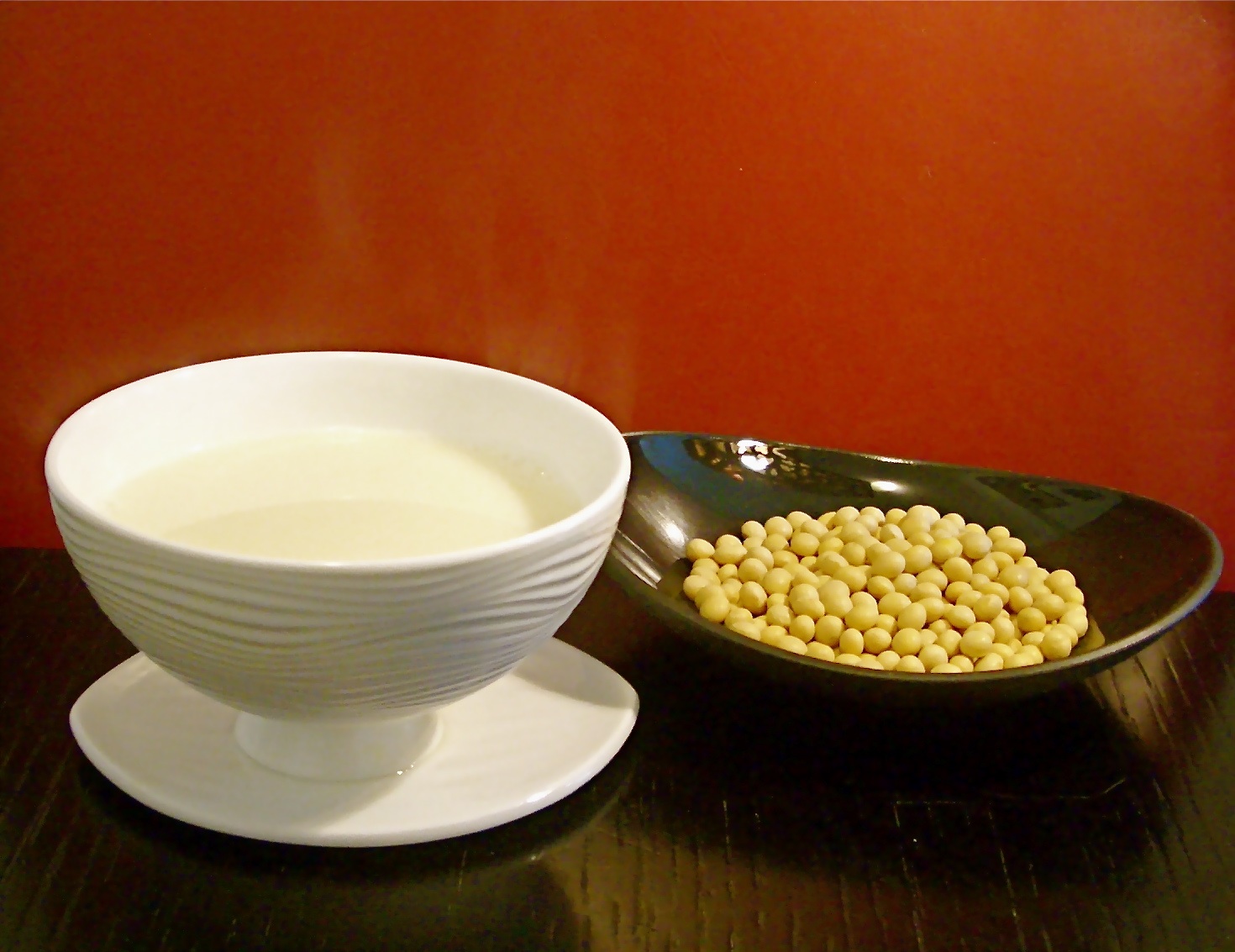
PRICE Organic soya beans HK$ 28 for 2 pounds (HK$ 30.8 per kg). Non-organic soya beans HK$ 7 per catty (HK$ 11 per kg). 1kg of soya beans makes about 3 litres of soya milk.

PRODUCT RATING Very Good. Homemade soya milk is fresh and delicious. No additives means it’s healthier for you. You can sweeten it to suit your taste. Easy to make and worth the effort. Economical. Very healthy, according to the US FDA:

“Soy protein products can be good substitutes for animal products because, unlike some other beans, soy offers a “complete” protein profile. Soybeans contain all the amino acids essential to human nutrition, which must be supplied in the diet because they cannot be synthesized by the human body. Soy protein products can replace animal-based foods–which also have complete proteins but tend to contain more fat, especially saturated fat–without requiring major adjustments elsewhere in the diet.”

GREEN RATING  Deep Green if made with organic soya beans or consumed as a dairy milk replacement (note: it does not mix well with coffee). Quite Green if made using conventional (GM) soya beans. Soya milk has a much lower carbon footprint than dairy milk. Homemade soya milk reduces that even further because less fossil fuel is used in transportation (liquids are heavier) and refrigeration is not required. In addition, there is no carton to dispose of.

AVAILABLE AT Organic soya beans are available at various health food stores. The price quoted above is from Green Concepts. Conventional soya beans are available in the wet markets.

As part of our effort to reduce our dairy consumption by 50%, we started drinking more soya milk. We began by buying organic soya milk in cartons. However, after researching all the additives in the ingredient list we became concerned. Vita brand soya milk, for example, contains a glazing agent to make it look brighter that is also used in shoe and car polish.

From an environmental perspective, we found the need to manufacture and dispose of single use cartons, and the high carbon footprint required to transport and refrigerate it quite troubling. Searching for an alternative we began making our own soya milk. Here’s how we make it: Continue reading “Fresh is Best”

Sometimes Green, Not Always Clean

We have tried many detergents in an attempt to reduce the impact of doing our laundry on the environment. According to this report by the US EPA on the Key Characteristics of Laundry Detergent Ingredients, many conventional laundry detergents contain substances that:

  • Are toxic to aquatic organisms like fish and algae
  • Are endocrine disruptors in animals, including humans
  • Diminish oxygen levels in water and hence reduce the water body’s ability to support  aquatic life (phosphates)
  • May cause cancer or other adverse health effects in humans

One of the most effective ways to reduce the impact of doing laundry is to minimize the amount of washing we do and to use less detergent. For example, towels, bedding, sweater and jeans don’t require heavy duty cleaning. For these items, we can cut our detergent use in half. According to the WSJ, many fashionistas are in fact washing their jeans as little as possible and are instead hanging them up to air out.

We hesitated somewhat before writing this article because without a testing lab, it can be quite hard to tell when clothes are clean. Our highly “scientific” method includes visually inspecting and smelling our laundry after a wash. Here is a review of the cleaners we have tried:

PRODUCT Ceramic Pieces Washing Ball (Korea)

PRICE HK$ 400 – 500

PRODUCT RATING Useless. The plastic ball contains ceramic pellets which supposedly change the pH balance of the water to wash your clothes without detergent. However, Consumer Council’s “Choice” magazine conducted lab tests that show that using it is no more effective than washing with water alone.

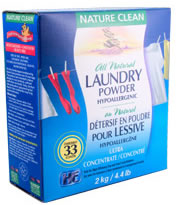
PRODUCT Nature Clean Laundry Powder (Canada)

PRICE HK$ 80 for 2kg

PRODUCT RATING Very good. Clothes look and smell clean. Results are very similar to conventional detergents. Has a very pleasant smell. Highly concentrated so only a small amount is required. Lasts a surprisingly long time for such a small box.

GREEN RATING Quite Green. Does not contain phosphates, chlorine bleach, synthetic dyes & perfumes, or optical brighteners. Formula is vegetable based derived from corn and palm kernel oil. The demand for palm oil though is a cause of deforestation of tropical rainforests. Powders are more concentrated than liquids, hence require less energy to transport. This may be somewhat offset by the fact that it is produced in the Canada. Packaged in a recycled cardboard carton.

AVAILABLE AT Club O in Mong Kok

Continue reading “Sometimes Green, Not Always Clean”

Bokashi: Dealing with Kitchen Waste

PRICE HK$ 399 for the system and 1 bag of the micro-organism (lasts 1 to 2 years).

PRODUCT RATING Good only if you have a place to bury the “compost”. This system is imported from Australia (where many homes have backyards) so it’s not very suitable for Hong Kong apartment dwellers.

GREEN RATING Quite Green. By separating kitchen waste, we went from throwing out 3 to 4 bags of garbage per week to only 1 per week.

AVAILABLE AT Greeners Action 

We were initially quite excited to learn about the kitchen waste “composting” program  at Park Island. Residents can pick up plastic container from the doorman, fill it with kitchen waste and return it to the doorman. Our understanding was that it would be processed by an on site kitchen waste “composting” machine and we naively assumed the compost would be used in the surrounding gardens. After attending a residents meeting, we learned that the compost was not used in the gardens because landscaping was outsourced to a company that did not use compost. We soon learned that it was actually being released to the sewage treatment plant. So electricity is used first to turn kitchen waste into sludge and then again by the sewage treatment plant to deal with this sludge. It would be hard to find a more ludicrous or damaging form of greenwash. Park Island is supposed to be a green community, which is not only greenwash but is hogwash, but that is a story for another day.

After realizing this, we bought a Bokashi “composting” system (the reason we keep putting the word compost in quotations is because none of these solutions are truly composting). The model we purchased is essentially two buckets, one nestled into the other like Russian dolls. The inner bucket, which you put your kitchen waste into, has holes at the bottom allowing liquid to drain out. The outer bucket collects the liquid. The latest model “Bokashi One” instead has a tap for draining the liquid, making it much more convenient. Continue reading “Bokashi: Dealing with Kitchen Waste”

Milk: The Old Fashion Way

PRODUCT NAME Trappist Dairy and Kowloon Dairy bottled milk

PRICE HK$12 for 2 bottles. HK$1 bottle deposit.

PRODUCT RATING Nothing beats the taste of fresh milk. You can tell the fresh milk (silver) apart from the reconstituted milk (green) by the color of the foil cap on the bottle. Some milk sold in cartons is Ultra Heat Treated (UHT) which changes taste, smell and affects its nutritional value. The minor inconvenience of having to rinse and return the bottles is pretty easy to get used to.

GREEN RATING Light Green. Dairy is very environmentally unfriendly, putting milk in a re-usable glass bottle as opposed to disposable paper carton may make it slightly less so.

AVAILABLE AT Most major convenience stores (7-11, OK) and supermarkets (Park & Shop, Wellcome).

First, lets start with two confessions: (1) buying milk in a glass bottle is probably about as green as driving a SUV with the air conditioning turned off in order to save energy, (2) we don’t possess the mathematical ability to verify that re-useable glass bottles are more environmentally friendly than disposable paper cartons. What we do know is that they won’t end up in the landfill after one use.

Although I know that milk is very environmentally unfriendly, I still have difficulty completely eliminating milk and cheese from my diet. I have however reduced my milk consumption by about 50%, by replacing it with soya milk.

Conventional dairy farming depletes nutrients in the ground and uses huge quantities of fertilisers — fertilisers account for roughly 1% of the world’s total energy consumption. And the methane cows emit in the atmosphere is over 20x times more damaging than CO2. Cadbury’s did a study of the carbon footprint of its chocolate bars and found that although milk only constitutes 1/3 of the weight of the ingredients, it was responsible for 2/3’s of the total carbon footprint. That is quite astonishing when you consider that the total footprint includes packaging, processing, transportation and obviously cocoa (which is itself not an environmentally friendly crop to say the least). Continue reading “Milk: The Old Fashion Way”

A Green Gift: Banner Bags

PRICE HK$ 200 for 3 carryall bags. Higher end bags go for up to HK$ 720.

PRODUCT RATING Very good. Functions very well as a shopping, gym or swim bag. Nicely designed, one-of-a-kind bags. Please note we have not tried out the higher end bags.

GREEN RATING Deep Green. Up-cycling durable but useless advertising banners into useful bags. These banners likely would otherwise have gone into the landfill. Locally produced.

AVAILABLE AT Bannerbag, ECOLS

Have you ever wondered what happens to those advertising banners that are literally everywhere in Hong Kong? As you can probably guess, after a very short “useful” life, they usually end up in the landfill. Banner Bags takes these banners and creates unique, one-of-a-kind bags out of them. This is a perfect example of up-cycling. The bags are made right here in Hong Kong, meaning that there are also no carbon emissions from transportation. For these reasons we rate Banner Bags Deep Green.

The three questions we look at when buying a bag are: does it function well? is it durable and well made? does it look gooood? Lets start with the last one first, cause we all know, with so many choices out there, we won’t buy a bag unless it makes us look fabulous.

DESIGN

The bags are nicely shaped and have visually appealing graphic designs. (You don’t need to worry, the bags won’t have photos from the advertising banners of District Council members) The design team takes meticulous care fitting patterns and colors together in an aesthetically appealing way. According to the owner, manufacturing had originally been set up on the mainland, however workers there didn’t have the design sense to create bags that looked good. So manufacturing was brought back to Hong Kong.

With most mass produced items, it’s difficult to own something unique. (Everyone in Hong Kong seems to own the same LV bags, making me wonder if we have an evolutionary predisposition towards the letters L and V, in the same way that monkeys have a preference for yellow tubular objects). With Banner Bags, each bag is different and they come in wide array of designs. Whether you’re a hipster, stay-at-home mom or busy executive, you’ll be able to find a banner bag that suits you.

FUNCTION

The stiffness of the banner material provides structure to the bag, making Banner Bags great for grocery shopping. The stiffness of the bag ensures that the heavy items, like cans or glass jars, stay at the bottom. This means that delicate items, like bread, eggs or veggie, won’t get crushed. The drawback is that you can’t just stuff one in your pocket or handbag.

The bags are also great for taking to the pool, beach or gym. The material is essentially waterproof, so you don’t need to bring along a separate plastic bag to put wet clothes in. The smooth, waterproof skin of the bags makes for easy cleaning – just give it a wipe with a damp cloth. This feature makes banner bags perfect as a gym bag. They are much easier to clean than traditional nylon gym bags. Continue reading “A Green Gift: Banner Bags”

Locally Made Noodles

PRICE HK$ 5-6 per piece

FOOD RATING Very good. What a wholesome, natural noodle should taste like. Does not contain preservatives, MSG (E621) or any other artificial additives.

GREEN RATING Egg and Shrimp/egg flavors: Light Green. Whole Wheat and Vegetarian flavors: Quite Green. Locally made in Hong Kong. No plastic packaging or packets of drying agents to dispose of. The whole wheat noodle is made of organic flour. Unfortunately, the other 3 types are not.

AVAILABLE AT GroundWorks in Wanchai

The noodles are sold by GroundWorks, a local social enterprise, in a little shop around the corner from Queen’s Cube in Wanchai. Instead of being individually packaged, the noodles are kept in large, traditional glass jars. This means you can avoid creating more rubbish by re-using your own plastic bag or bringing a container to take them home in. I usually re-use a plastic bread bag after shaking the crumbs out. The shop will provide you with paper bags though if you don’t bring your own.

The noodles are available in four flavors: egg, shrimp/egg, whole wheat and vegetarian. The egg and shrimp/egg flavors come in both thick and thin widths, while the whole wheat and vegetarian only come in thick. The noodles are great in soup or drained and mixed with a sauce. I like to eat them mixed with a sauce consisting of ketchup, oyster and chili sauce with some sesame oil. At first the noodles may not seem as tasty as the ones you normally eat because they don’t contain any MSG (E621), an ingredient found in almost all other noodles. The absence of MSG though really allows the natural taste of the ingredients to shine through.

Of the four flavors, the whole wheat noodle is the most unique because you can actually feel the texture of the wheat. Some may find the texture a bit too coarse though. It’s like eating a noodle version of whole meal wheat bread. Mixing it with another flavor makes for a nice contrast. Continue reading “Locally Made Noodles”

Bamboo Dish Pad & Wiping Cloth

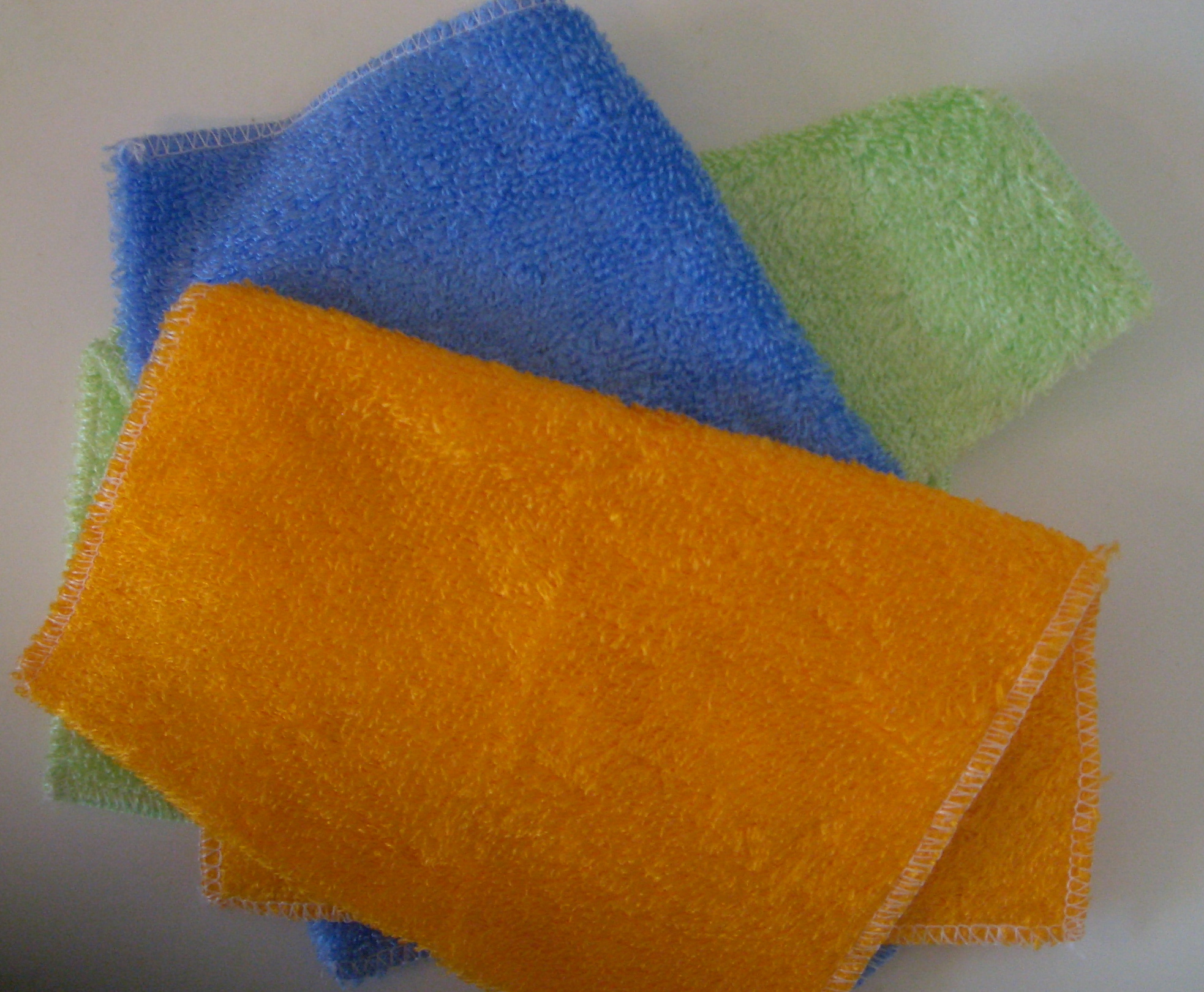
PRICE HK$ 40-55 for a pack of 4 cloths

PRODUCT RATING Pretty Good, without dish detergent, when used for washing dishes that are not too greasy. Just Ok, with detergent, for dirty dishes. Excellent when used for wiping countertops. A superior product for many uses, but does not replace a sponge with an abrasive pad for hard-to-clean dishes.

GREEN RATING Light Green to Quite Green depending on the manufacturing process chosen by company. Made from 100% bamboo fiber. Durable. The anti-bacterial quality of bamboo means you can go without detergent for light cleaning. (note: there is some controversy about whether the anti-bacterial quality of bamboo remains after going through the manufacturing process.) The Noesis brand cloth is certified organic.

AVAILABLE AT Club O. They are sold by two Hong Kong companies (Noesis is one, the other I can’t remember the name) usually at booths in malls or shopping areas. Also sold at Mai Po Po in Fan Ling during their local organic farmers market on Wed and Sun.

For wiping our dining table and kitchen counters, we used to use the ubiquitous Scotch-Brite Kitchen Wipes. These are the ultra-thin, blue striped, perforated cloths that seem to occupy every home. From a user perspective, I have always been dissatisfied with them. Firstly, they are too thin to be held properly when wiping something down and have a very unsatisfying, disposable feel to them. Then after a dozen or so uses, they get that squishy feel that is really quite gross.  You start to wonder, what kind of germs are brewing in that moist, mushy cloth. The cloth then eventually starts to smell, as if to confirm your initial fears. Although they are advertised as washable, who feels like putting something like that in the wash with their clothes?

Since they are so cheap and because no one wants to wash them, I suspect most of us end up throwing them away before the end of their useful life. Minimizing the use of disposable items, that over a lifetime clog up our landfills, is a key principle of living sustainably. In addition, these wipes are produced from petrochemical derivatives making them inherently unsustainable.

We also avoided the use of a cotton dish cloths because cotton is one of the most environmentally unsustainable crops. Although advertised as natural, the growing of cotton today constitutes 25% of annual worldwide insecticide use, while only occupying 3% of agricultural land. The land on which conventional cotton is grown is a dead zone, no other plants, animals or insects can survive on it. Bamboo on the other hand grows rapidly and naturally without any pesticides, herbicides or fertilizer. It has a massive yield per acre and is probably one of the most sustainable crops in the world. Bamboo, like trees, also sequester CO2.

The bamboo cloths reviewed here are sold for washing dishes, but we also use them for wiping tables and countertops. For this use, they have many advantages that make them simply superior to both Scotch-Brite wipes and cotton cloths. The first thing you notice when you touch them is the thick, quality feel that just feels just right in your hand. They are soft and absorbent like cotton, but don’t get that super heavy feel when soaked with water. It’s like a cross between synthetic quick-dry and cotton. Continue reading “Bamboo Dish Pad & Wiping Cloth”

Local Organic Farmers Market

Pictured above: “Brother So” sells produce at Star Ferry Pier on Wed. PRICE HK$ 16-30 per catty (1 catty = 650g) depending on the market. Farmers at each of the markets generally charge similar prices. In contrast, supermarkets charge HK$ 15-17 per 250g for Mainland grown organic vegetables. Cheapest: Fan Ling. Most Expensive: Mei Foo. FOOD RATING Locally grown means produce is picked fresh, retaining more nutrients and … Continue reading Local Organic Farmers Market