Agri-Park

Screen Shot 2015-01-02 at 7.48.50 pm

Here is our analysis of the new Agricultural Policy issued by the Hong Kong government.

The Pantheon 

The government is proposing to spend HKD 7 billion to encourage the development and growth of the agriculture sector by establishing a 80 hectare “Agri-Park”. While this is all well and good, the first question we must ask is: what is the governments track record in nurturing sectors other than real estate? The Pantheon of government schemes that produce nothing (other than taxpayer funded or subsidised construction projects) includes: the Science Park, the EcoPark, a CyberPort, an Innocentre and numerous others.

No Pain No Gain

The government will acquire privately-owned agricultural land (including land within the country park zone) from landowners to build the Agri-Park. In a market economy, when supply is fixed and demand increases (due to the government entering the market as a large buyer), prices will rise. The resulting increase in land rental cost will in effect be detrimental to existing farmers. This scheme will hurt the farmers that it is purportedly trying to help.

In this case the pain will be borne by the farmers and gain will be reaped by the construction industry, landowners and bureaucrats.

Innovative Bureaucrats: An Oxymoron 

A farmer’s investment is largely comprised of his time and effort in improving the land. Through weeding, cultivation, and enrichment of the soil a farmer creates an environment optimal for plant growth. Unlike a software company incubated in a technology park, the farmer cannot simply move. This scheme can only have been thought up by “innovative” bureaucrats whose experience of farming consists largely of playing FarmVille. Continue reading “Agri-Park”

The Quiet Hero

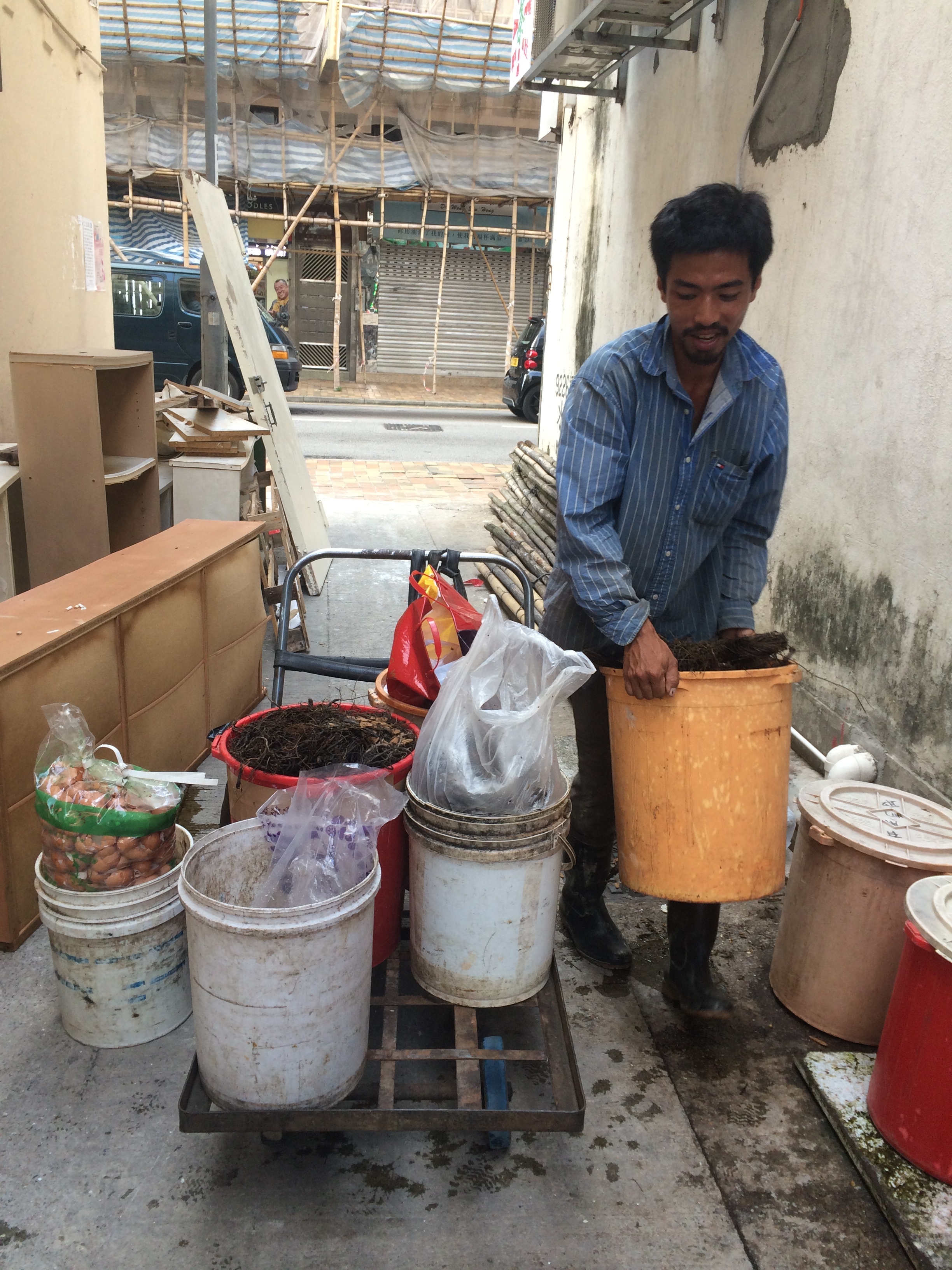
IMG_2439 Everyday, after finishing his field work at Mapopo community farm, Farmer Chi Ho can been seen collecting food waste from local restaurants and drink shops around Leun Wo Hui. He brings 100kg of egg shells, shredded coconut, soya meal, tea and coffee grounds back to the farm where it is composted and turned into organic plant nutrients used to grow vegetables. Since he works every day, this amounts to Herculean 3 tons per month of reclaimed waste.

Unlike the organic vegetables grown at Mapopo, most of the food we eat today is grown on large scale industrial farms, and shipped from hundreds if not thousands of miles aways. Our food waste, instead of being recycled back into plant nutrients, is discarded into the landfill.

According to government statistics, food waste constitutes  36% of total landfill waste. Hong Konger’s generate 1.99kg of waste per person per day (in Japan it is 1.71kg, Singapore 1.49kg, and South Korea 1.24kg) and our landfills will be full in a couple of years. The governments position is that this requires a massive expansion of landfills that are vigorously opposed by the public, the building of unpopular incinerators  and a few token food waste processing plants. Places such as Japan, Korea, Singapore and Taiwan have experienced decreases in landfill waste with the implementation of municipal waste charging fees and recycling programs. These common sense measures, while supported by the public, are opposed by the powerful business interests that select our political leaders.

Landfill expansion is only half the story when food waste is dumped into a landfill. When organic matter, such as food waste, enters our landfill it decomposes anaerobically. This results in the release of methane, a greenhouse gas 20 times more efficient at trapping heat than CO2. Continue reading “The Quiet Hero”

The Business of (Urban) Farming

creativity-2013

In a previous article we explored the benefits of urban farming in Hong Kong. The term “urban farming” is commonly used to describe what is in fact gardening – a leisure activity for city dwellers whose hobby is growing vegetables. Farming on the other hand is an industry focused on the production of food. As such, is has entirely different objectives, requirements, scale, methods and business models. Urban farming is subject to the same market forces that affect traditional field farming.

Urban farming, in the food production sense, faces two types of challenges: business and technical. The technical or horticultural challenges unique to urban farms include overcoming the limitations and micro-climate conditions specific to rooftops – which we will explore in the future. Here, we will address only the business challenges. These include (but are not limited to): government policy and space, financing and the business environment, and skilled labour and supplier base.

GOVERNMENT POLICY AND SPACE

The first challenge to farming of any kind is securing space. Government policy in Hong Kong explicitly and implicitly favours the property development sector. By definition, it does so at the expense of other sectors such as agriculture. Policies that favour property development encourage speculative, short-term investments that push farmers out of even rural land markets.

Urban farming could theoretically side-step these speculative side effects by putting to use rooftops that have virtually no other use. Unfortunately, the gap in rent between what would be sufficiently financially rewarding for a landlord and what would be financially sustainable for a farmer is simply too large to bridge. Continue reading “The Business of (Urban) Farming”

The Pursuit of Love, Success and Happiness

Steve Jobs

Steve Jobs, Mark Zuckerberg, Albert Einstein, Barak Obama, Dean KamenKarl Lagerfeld, Carolina Herrera, Tom Ford, Marc Jacobs, Vera Wang, Micheal Kors, Tom Wolfe, Stanley Kubrick, Andy Warhol

What do all these accomplished people have in common? They are not pursuing the latest fashion trends and basically wear the same thing all time.

Hong Kong government statistics show we create 293 tons of textile waste per day. While this is in itself astounding, what is even more vexing is how counterproductive it all is. The purpose of this consumption is ostensibly to make us feel more confident and create a memorable impression. Ultimately helping us find love, success and live the good life. Unfortunately, the pursuit of the latest trends has two huge drawbacks.  Continue reading “The Pursuit of Love, Success and Happiness”

Rooftop Farming in Hong Kong

This article was updated in January 2016. Urban farming on rooftops has been gaining traction in cities around the world. Its rise can originally be traced to consumers increasing awareness of carbon emissions that result when our food travels hundreds, if not thousands of miles from the farm to our table. As an experienced urban farmer that grows on the rooftops of commercial buildings such … Continue reading Rooftop Farming in Hong Kong

Economic Growth is Good…or is it?

DSC_0007

“Only by maintaining Hong Kong’s stability can we sustain our economic prosperity. Only by sustaining Hong Kong’s prosperity can we improve people’s livelihood.” CY Leung July 1, 2014

This quote encapsulates the argument of the pro-China business groups in Hong Kong.  Their argument is two-fold: (1) that transitioning to a legitimate form of democratically elected government will cause instability and thus reduce economic growth, and (2) that economic growth is necessary to improve peoples lives. While we disagree with both, it is the second assertion that is relevant to the environment. It forms the justification for our most environmentally damaging behaviour.

This is the myth that we are setting out to debunk with some thought experiments. Thought experiments are favoured by scientist and philosophers, while complex models that are to a shocking extent unsubstantiated by empirical evidence are favoured by economists. (Disclosure: your author studied both economics and philosophy at the University of Toronto).

Look at the picture above. What do you see? Local residents sitting under a tree on a hot day? Wrong! That is a potential source of economic growth. Arborist’ could be employed to cut down the tree, drivers to transport it and factory workers to turn it into furniture or paper. It would then be transported back to a store to be sold by a clerk. At every stage of this “value creation” process, people are employed and income is earned resulting in economic growth. Continue reading “Economic Growth is Good…or is it?”

A Delicious Irony

Hydroponics is a method of growing plants using mineral nutrient solutions, in water, without soil. In a recent Mingpao article titled “Farming can make money”, the purveyors of hydroponically grown produce tout many of its impressive benefits. Chief among them was food safety.  They rightly point out that much of China’s land is contaminated and its fresh water is polluted. This jeopardises our food safety since most of … Continue reading A Delicious Irony

Year End Carbon Review

Another year has come and gone. This makes it a good time to review our personal impact on the environment. While we may all proclaim our love of nature and all the beautiful creatures, nice sentiments are not nearly enough. That time has passed, climate change is upon us. We need to be driven by facts, data and most importantly personal accountability. If we want … Continue reading Year End Carbon Review

Technology is the Answer…or is it?

Screen Shot 2013-08-02 at 9.12.55 PM

In 50 years, every street in London will be buried under nine feet of manure.

The London Times, 1894

Most of us by now are aware of the challenges we will face in coming decades – climate change, water shortages and mass extinction of species to name a few. Many believe that technology will solve all these problems. That we can continue to consume as usual because human ingenuity will, as it always has, find technological solutions to our most pressing problems. Lets review the four most important technological innovations of the last century to find out if our faith is warranted.

THE GREEN REVOLUTION

Thomas Malthus predicted that overpopulation would result in widespread poverty, famine and war. Population did grow from 1 billion in the 1800’s to 7 billion today. However, food production also grew rapidly as a result of a set of technological innovations, known as the green revolution. The hunger and poverty that Malthus predicted never came to pass (at least for those lucky enough to be born in the developed world). The key elements of the green revolution were hybrid seeds, chemical pesticides and synthetic fertilisers. They are the foundation that makes the modern world possible by freeing up people from having to grow their own food. They are also the source of some of the most serious environmental problems today.

The petrochemical fertilisers are causing vast dead zones in our oceans and rivers. Chemical pesticides are contaminating our soil and water, and causing the loss of biodiversity. Hybrid and GM crop varieties produce increased yields, but require much greater inputs of water and fertiliser. The irrigation required to grow high yield varieties is resulting in the alarming depletion of ground water. According to Lester Brown, our current farming practices based on the green revolution, are now a threat to world food security.  The solution has now become the problem.

ANTIBIOTICS

Before the invention of antibiotics, everyday ailments commonly resulted in unimaginable pain or even death. All the surgeries conducted today are made possible only by antibiotics. However, most of us are unaware of the fact that over 60% of all antibiotics produced are not consumed by humans.  Instead, they are being fed to livestock not to prevent disease but to enhance growth, so we can buy cheap meat. As a consequence of this widespread use, drug resistant bacteria are proliferating.

A recent Australian report says there is ‘a genuine threat of humanity returning to an era where mortality due to common infections is rife’. According to Australia’s top scientist, the overuse of antibiotics is threatening to return us to a world where deaths result from minor ailments such as sore throats and cut knees. England’s chief medical officer, Dame Sally Davies, warned in a March report that untreatable infections posed a “catastrophic threat” to the population.

ENGINE

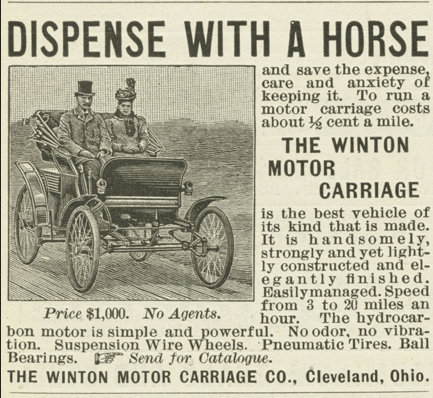
In the 1900’s, there was a horse-manure crisis. In New York, a population of 100,000 horses was producing 2.5 millions pounds of manure a day. The streets were covered with manure and air was thick with flies. The technological solution came in the form of cars and buses powered by fossil fuel. The manure crisis was averted. Continue reading “Technology is the Answer…or is it?”

Cost Benefit Analysis of Golf

golf6

Golf has been in the news recently because it has been proposed that the government take back the land that the Hong Kong Golf Club (The Club) sits on to develop housing. It is argued that it would be preferable to eliminate the golf course rather than relocate villages and destroy farmland. In order to ascertain the validity of this assertion, we should examine the costs versus the benefits of golf.

BENEFITS

The benefits of golf have been clearly articulated by the local golfing community as they seek to justify the taxpayers continued subsidy of their exclusive, members only Club:

BUSINESS

In a recent SCMP article, a representative of The Club justified its existence on the basis that Hong Kong is an international business centre and golf plays a big role in business (lots of business gets done on a golf course). As a professional starting out in my career, I remember how golf was a constant topic of conversation around the office. Many of my bosses were avid golfers and corporate events were often golf trips followed by BBQ dinners. So yes, I do believe there is a connection between golf and business. It might be a stretch however to call it an important one. There has been no research that links golf to economic development (as there is with education, infrastructure and the rule of law). If there were, Scotland and Thailand would be business superpowers today.

OLYMPICS

William Chung Pui-lam, president of the Hong Kong Golf Association, said growth of the game – recently made an Olympic sport – would suffer if the Hong Kong Golf Club’s three-course, 170-hectare facility at Fanling were lost to housing. Bobsledding is an Olympic sport, and its development is also suffering due to lack of venues in Hong Kong. Perhaps we should also dedicate public resources to its development?

THE RICH LIKE GOLF

Another housing adviser, Lau Ping-cheung, said the land use of golf courses should be reviewed together with all other private recreational clubs. “But we need to discuss and understand the possible social impact, because Hong Kong is an open city with lots of rich people and foreigners who might be interested in golf.” Rich people also like private jets, perhaps we should subsidize runways for private jets as well?

THE PRESENCE OF DOMINIQUE BOULET

Golf commentator Dominique Boulet, a former Hong Kong representative and a member of the club for almost 30 years, said: “If we lost the Hong Kong Golf Club, I’m not sure I would live here any more.” I never realized how much I would miss Mr. Boulet until he threatened to leave. In fact, I had never heard of him before he made this statement to the SCMP.

COSTS

PESTICIDE USE

NY States Attorney General’s office published a report entitled Toxic Fairways. The report, which was particularly concerned with the potential for groundwater contamination, concluded that these [NY] golf courses applied about 50,000 pounds of pesticides in one year, or four to seven times the average amount of pesticides used in agriculture, on a pound per acre basis. Pesticide and fertilizer runoff contaminates ground water, poisoning both humans and wildlife.

It is quite ironic, the number of golf charity events held to raise money for cancer research when there is  evidence of major excesses of non-Hodgkin’s lymphoma, brain, colorectal and prostate cancers in golf course maintenance workers and superintendents exposed to high concentrations of carcinogenic herbicides and fungicides. The cost of cancer treatment for golf course workers will undoubtedly be borne by the taxpayer funded public healthcare system.

WATER USE Continue reading “Cost Benefit Analysis of Golf”