Are you mosquito bait?

PRODUCT & PRICE Lemon grass oil from Taiwan HK$62

PRODUCT RATING Safe and very effective. Rub it liberally on all exposed skin (use alot) and you’ll rarely get bitten. Needs to be re-applied after a couple hours. Has a strong smell – some people like it, others don’t.

GREEN RATING Quite green. Chemical free. Made of plant-based essential oils. Packaged in a re-fillable glass spray bottle. Completely bio-degradable leaving no trace in the environment.

AVAILABLE AT Health Aims

There is nothing more annoying when you’re enjoying a hike on a nice day than being bitten by mosquitoes.  Since I spend a lot of time outdoors, I’ve tried many of the mosquito repellents on the market. Here is a review of the repellents most commonly found on store shelves.

DEET

The active ingredient in most insect repellents is DEET. It is the most effective insect repellent, but there are human health and environmental concerns associated with its use. According to the US EPA, DEET is slightly toxic to birds, fish and aquatic invertebrates. The overall impact of use on the environment is limited because it is applied only to skin and clothing. However, the production of chemicals such as DEET is inherently environmentally unfriendly.

Of greater concern may be the effect of DEET on humans and this is where it gets more complicated. While deemed safe when used in accordance with instructions, incorrect application can lead to health issues such as skin irritation, disorientation, dizziness and, in extreme cases, seizures or death. According to Cornell University study “Everglades National Park employees having extensive DEET exposure were more likely to have insomnia, mood disturbances and impaired cognitive function than were lesser exposed co-workers”. In 2002, citing human health reason, Health Canada barred the sale of insect repellents for human use that contained more than 30% DEET. The environmental group Beyond Pesticides, lists DEET as neurotoxin. For both environmental and personal health concerns, I avoid all repellents containing chemicals.

PATCHES and WRIST BANDS

I have found that these patches and wrist bands don’t work because they only cover very small areas effectively – mosquitoes will inevitably bite you where you don’t have a patch or wristband. Continue reading “Are you mosquito bait?”

BYO Chopsticks to Reduce Deforestation

PRODUCT Portable chopsticks with case

PRODUCT RATING Very Good. These single-piece, portable chopsticks by muji require no assembly. The chopsticks and case are easy to clean. However, some may have difficulty adjusting to slightly shorter length. Like most of muji’s products, they are relatively high quality and well designed. Made of plastic.

GREEN RATING Light Green. Single-use, disposable chopsticks are a huge problem adding to the plague of regional deforestation. If you use disposable chopsticks while eating lunch at your desk or at sushi restaurants, try bringing a pair of your own. In addition to deforestation, there are also other health and environmental issues associated with using and disposing of single-use chopsticks.

AVAILABLE AT muji. You can also find other portable chopsticks in stores throughout Hong Kong.

Do you use disposable chopsticks to eat lunch at your desk? Or enjoy sushi at places that provide disposable chopsticks? You may want to consider bringing your own for the sake of the planet and your own health. According to the NY Times:

Each year, the equivalent of 3.8 million trees go into the manufacture of about 57 billion disposable pairs of chopsticks in China, according to statistics from that nation’s national forest bureau. About 45 percent of disposable chopsticks are made from trees like cotton wood, birch, and spruce, while the remainder are made from bamboo.

Due to lax enforcement of productions standards in China, disposable chopsticks also pose other risks for consumers and the environment:

Industrial-grade sulfur, paraffin, hydrogen peroxide and insect repellent are among the harmful chemicals that Chinese media investigations have exposed during production. Paraffin is a known carcinogen, and hydrogen peroxide can harm the digestive system. Chopsticks irresponsibly disposed of can contaminate water and soil quality. Continue reading “BYO Chopsticks to Reduce Deforestation”

BYOB to the Bakery

PRODUCT Locally made baked goods

PRODUCT RATING Delicious. Factory-made baked goods from the major chains (Maxims, etc) just can’t compare with the warm taste of fresh-from-the-oven buns made by your neighborhood baker.

GREEN RATING Quite Green. Neighborhood bakeries don’t pre-package their buns in plastic bags, meaning you can bring-your-own-bag (BYOB). Switching to locally baked buns also reduces air pollution. Explained below.

Walking around Hong Kong, you see bakeries literally on every block. This makes getting a tasty bite to eat very convenient. However, due to the unsustainable practices of the major bakery chains, there is a very heavy cost inflicted on the environment. In 2009 (when the plastic bag levy came into effect), bakeries were responsible for 262 million plastic bags ending up in the landfill. A year later, that increased to 370 million bags, an increase of 21%. The ineffectual plastic bag levy exempted many retail categories, including bakeries. Seeing the writing on the wall, many bakery chains decided to “pre-package” their buns in order to circumvent the anticipated future expansion of the bag levy to the previously excluded categories. This is an example of a well intentioned, but poorly executed legislation causing more harm than good (we need a levy on ALL plastic bags).

Most bakery chains in Hong Kong do not produce their baked goods on site. They are produced in factories and then delivered all over Hong Kong. This business model reduces cost and allows the chains to capture economies of scale in production. But the taste of factory made buns just can’t compare with ones freshly out of the oven from your neighborhood bakery. The buns at some of the chains taste like they are made of sugar-coated cardboard. For me, nothing beats a warm, fresh-from-the-oven bun.

This centralized production model results in delivery trucks driving around Hong Kong every day adding to our already dismal air pollution. In contrast, your local neighborhood bakery probably has ingredients delivered once a month, resulting in a lower carbon footprint and reduced air pollution.

When buying baked goods, I would encourage you to try the following in order to reduce the environmental impact:

1. Buy from your neighborhood bakery that bakes its goods onsite. This will support local enterprises while also reducing air pollution in Hong Kong. Continue reading “BYOB to the Bakery”

Sustainable Canned Tuna

PRODUCT & PRICE Marks & Spencer canned tuna steak HK$30(2nd from top)

PRODUCT RATING Tuna steak is much tastier than flaked tuna. However, all tuna should be consumed in moderate quantities due to mercury, from coal fired power plants, that accumulates in the flesh of many larger fish.

GREEN RATING Quite Green for not using endangered species and destructive fishing methods in its canned tuna products. M&S only uses skipjack in its canned tuna products. Unlike many other tuna species, the skipjack tuna population is considered sustainable against its current consumption. According to the Marine Conservation Society (MCS), skipjack tuna stock is neither overfished nor experiencing overfishing. M&S uses only pole and line catch method (no nets) which eliminates “bycatch”. Sharks, rays, marlins, turtles and other fish caught as bycatch are usually thrown back dead because they are the wrong species, the wrong size, of inferior quality or surplus to the fishing operation’s quotas. M&S is ranked #2 in Greenpeace UKs 2011 ranking of sustainable tuna products. John West is ranked #7, while other Hong Kong supermarket brands, such as Ayam, do not specify species or fishing method (labeling is the absolute minimum requirement to even be considered in sustainability rankings). Please remember to recycle your tins.

According to Australian Food News:

“The majority of canned tuna is caught using fish aggregation devices (or FADs) — floating and submerged objects that encourage tuna to gather around them. The fish are then scooped up in huge nets called purse seines.

Marine animals are killed or harmed in fishing operations without ever being brought on board. Species like turtles and dolphins get tangled in nets or hooked on longlines. Even those that escape are sometimes too injured or weak to survive the ordeal. Continue reading “Sustainable Canned Tuna”

Oh…So… Cool

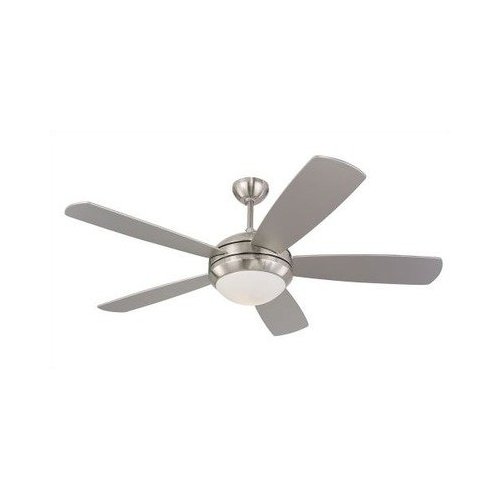
PRICE RANGE HK$ 400 to 3000. Installation may be extra (we paid HK$ 400 to have ours installed).

PRODUCT RATING Cooool. Fans cool you gently without making you vulnerable to colds. According to a study conducted by Cardiff University, “Air conditioning itself may contribute to infection with common cold viruses. The lining of the nose is covered with a thin layer of mucus which protects against infection. Since air conditioners extract moisture from the air they may cause some drying of the protective mucous blanket in the nose and predispose to infection. The cold air may also help viruses to establish a hold in the nose as they reproduce better in a cold nose”. Not to mention the havoc that is caused to your body when you walk into a freezing cold room after having been outside in the blazing heat.

GREEN RATING Quite Green. Fans consume only one-tenth the electricity compared to an air conditioner. However, due to the inconceivably poor design of Hong Kong apartments – with large, protruding bay windows that trap heat, windows that don’t open to allow ventilation, etc – fans can only be used primarily as a complement rather than a substitute for air conditioners. Fans are simple, durable devices. In comparison, air conditioners are complex to manufacture and dispose of safely. New air conditioners contain refrigerants (flourocarbons) that do not deplete the ozone layer, but still contribute to global warming because they are potent greenhouse gases.

AVAILABLE AT http://www.smcfans.com/products

Modern humans are comfortable within a fairly narrow temperature range – according to the EPD, over 90% of building occupants feel comfortable with temperature between 22.5C and 25.5C. In Hong Kong, where summer temperatures can easily rise above 30C, we face a conundrum – do we use an air conditioner to make ourselves cooler today, while pumping more greenhouse gases into the atmosphere that will guarantee a hotter climate for ourselves in the future?

One way we can try to maintain a cooler living environment while lessening our impact on the planet is to use fans. By installing a ceiling fan in our bedroom, we have been able to reduce the number of nights we turn on the air conditioner by about 30% (the two weeks at the beginning and end of summer). Even when we do use the air conditioner, we are able to able to set it at 26C. For every 1C increase in your thermostat setting – you reduce your electricity consumption by 3%. Continue reading “Oh…So… Cool”

The Shark Fin Free Banquet

Thanks to the efforts of tireless individuals from organizations such as Bloom and Sea Shepherd there are many more shark fin free banquet options in Hong Kong. Bloom has been instrumental in working behind the scenes to help hotels and restaurants understand this issue, while Gary Stokes of Sea Shepherd has been fearless in his own unique approach. Studies show that predator shark species have all … Continue reading The Shark Fin Free Banquet

The Original Non-Stick

PRODUCT Cast iron skillet

PRICE HK$80 for the 10.5″ pan

PRODUCT RATING Excellent for pan-frying, braising, searing and sauteing (and quite possibly as a weapon …it is very, very heavy). Due to the excellent heat diffusion and retention properties, you can get that sizzling golden brown, teppanyaki effect that just can’t be duplicated on a non-stick pan. I think it would be great for searing meat, although I haven’t tried it myself, as I stopped cooking meat a few years ago.

GREEN RATING Deep Green. I’ve only owned it for a short time, but have a feeling that it will last forever. This is just so much greener than throwing a non-stick pan into the landfill every 6 months.

AVAILABLE AT We bought ours at a cookware shop on Shanghai Street (Yau Ma Tei MTR). There are various brands at different price ranges available at kitchen shops around the city.

Yvonne Chounard, Patagonia’s founder, defined a well made, well designed product as one that lasts a long time, is easily repaired and then finally breaks down in many places at the same time. For example, a pair of Levi’s lasts many, many years, but when its seen too many days, it gets holes in the knees, frays at the bottom, small change falls through the pockets all at the same time. He defined a poorly designed product as one where if one part breaks, the whole thing is trashed. For example, if one tiny part in our stereo, TV, or computer breaks we end up throwing the whole thing away.

Based on this definition, non-stick pans are pretty poorly designed. After 6 months of use, the pan still looks fine, but because the non-stick coating is worn, the whole thing has to be thrown away. I’ve tried many brands from Meyer to Tefal to Silverstone and they all end up in the trash within a year. I end up buying a new pan every year and throwing my old one into the landfill. Continue reading “The Original Non-Stick”

30 Seconds Can Make a Difference

“We did not inherit the Earth from our ancestors, but have only borrowed it from our children”  – Native American proverb

“What gets measured gets done” – business maxim

WHAT IS THIS ABOUT?

HKEX is holding a Public Consultation that “seeks views and comments on the proposed ‘Environmental, Social and Governance Reporting Guide’ (the “ESG Guide”) for issuers [companies] listed in Hong Kong”.

WHY IS THIS IMPORTANT?

If you are reading this, you are probably already aware of the seriousness of the environmental problems facing us all. As enlightened consumers, we cannot solve these problems on our own. Government and corporations must do their part. Through the Public Consultation process, we as citizens must make our voices heard and demand that they do their part. Democracy and civic society is like a muscle, if we don’t use it, it will shrivel up. If we do not participate when given the opportunity, we cannot complain, “government only listens to business”.

According to the HKEX “a company is taken to be responsible for its impact on society and the environment. A company should operate in a sustainable manner and create long-term value for shareholders and other stakeholders by integrating sustainable practices into its operations.” We could not agree more.

WHAT IS THE HKEX PROPOSING THAT WE DISAGREE WITH?

The HKEX is proposing to make environmental reporting VOLUNTARY because they believe it is “premature” at this time to make it compulsory. However, they give no reason why it is premature other than “many issuers may not consider ESG performance and reporting a priority”. Any elementary school teacher can tell you that if you make homework voluntary, it will certainly not be a priority for the students. This is completely circular logic.

WHAT ARE WE PROPOSING?

Demand COMPULSORY reporting or at a minimum raising the level from voluntary to “obligation to comply or explain” why they are not complying with the reporting requirement.

WHAT CAN YOU DO? 

If you agree that environmental and social responsibility reporting needs to be compulsory, please copy and resend the following before 9 April 2012: Continue reading “30 Seconds Can Make a Difference”

The Right Water Bottle for You

It would be an extreme understatement to call the garbage created by bottled drinks a serious problem. In Hong Kong, less than 4% of disposable plastic (PET) drink bottles are recycled and Coca-cola owned brands alone produce 1 million bottles a day (you read that right, it’s per day). These bottles end up in the landfill or worse yet in the ocean. According to National … Continue reading The Right Water Bottle for You